




What is anxiety icd 10?
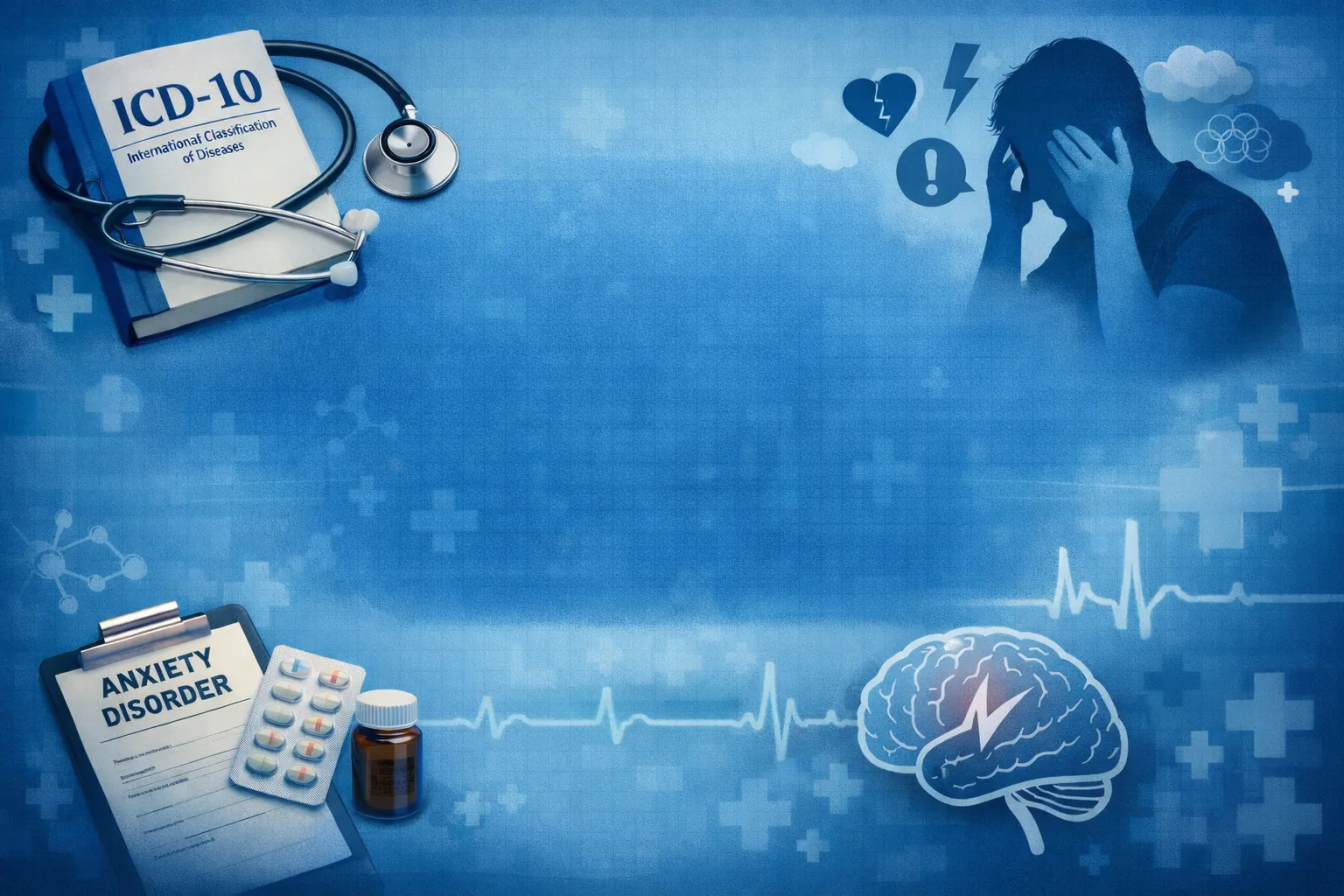
One of the mental health problems is anxiety. It is diagnosed according to the ICD-10, which is a global system developed by the World Health Organization (WHO). In this system, medical practitioners use standardized codes to classify and diagnose diseases including those in mental health. These codes promote uniformity in the healthcare systems. They enable the correct clinical evaluation and enhance the process of monitoring symptoms and care. With the help of the clear criteria established in the ICD-10, professionals are able to record diagnoses and mean functional impairment.
Experts assess long-lasting worry, lasting six months or more, to diagnose anxiety. They also look for physical symptoms that affect daily life. Tools like the DSM-5 and DSM-5-TR are used to ensure the accuracy of diagnoses. While genetics can influence anxiety, it is the outward symptoms and their effects on a person’s life that lead to a clinical diagnosis. At Calm Minds Hub, we focus on explaining the ICD-10’s role in anxiety treatment. We offer clear and reliable information to support mental health care.
How ICD-10 codes are structured
ICD-10 has a standard coding structure. It fits within the ICD classification system. Each code shows a specific condition. These codes are in the ICD-10 and CMS databases. They’re updated with current and billable codes. This helps reduce confusion around synonyms for stress and provides clarity in medical records. The coding process helps with admin tasks. It works well with EHR and electronic health records, and it stays HIPAA-compliant.
Why accurate coding matters in healthcare
Accurate coding helps with medical necessity. It makes insurance billing easier. This leads to correct payments. It also cuts down claim denials during approvals and checks. Good documentation is key. Clear notes are important. Detailed updates help with outcomes. They also support healthcare rules and keep things running smoothly. This accuracy helps practice management. It speeds up billing. It stops reimbursement delays. It also ensures access to behavioural health services.
Types of Anxiety Codes in ICD-10
In anxiety ICD 10, mental health issues fall into four main groups:
- Anxiety disorders
- Neurotic disorders
- Stress-related disorders
- Somatoform disorders
This helps with a clear diagnosis.
Codes like F40 and F41 help identify anxiety related to fear, worry, and tension. F42 points out obsessive symptoms that often overlap with anxiety. Accurate coding helps with diagnosis. It shows if someone has anxiety or depression. It also helps spot substance use disorders and other conditions that can occur together.
Generalized anxiety disorder
Generalized anxiety disorder (GAD), coded as F41.1, involves excessive worry that lasts for six months or more. This worry often leads to noticeable problems in daily life. Common symptoms include muscular tension and nervousness. You may sweat, feel your heart race, or get dizzy. Many wonder if anxiety is in their family. Tools like GAD-7, Beck Anxiety Inventory, and BAI support symptom monitoring and track severity indicators.
Panic-related diagnoses
Panic disorder is coded as F41.0. It causes sudden panic attacks. These attacks bring strong autonomic arousal. You may feel changes in heart rate, shortness of breath, or a choking feeling. Chest pain and nausea can also occur. Episodes can include derealization and depersonalization. You might fear dying or losing control. You may also feel numb, have chills, or feel heat. These feelings can change your daily routines. Tracking panic frequency helps explain ongoing behavioral changes..
How to Find the Right Code Step by Step
- clinical diagnosis based on a structured assessment and accurate documentation
- Use of defined diagnostic criteria with approved standardized assessments and assessment tools.
- Identification of clear diagnostic indicators to support the proper coding process and diagnostic alignment.
- Detailed clinical notes that meet all diagnostic requirements and guide anxiety treatment.
- Presentation of symptoms and physical symptoms such as nervousness, trembling, sweating and palpitations.
- Matching findings to correct diagnostic categories through careful differential diagnosis.
- Exclusion of other medical conditions such as thyroid disorders, cardiac issues, and respiratory conditions.
- Evaluation of anxiety from substances. This includes caffeine use and stimulant use. It also looks at withdrawal symptoms. Trauma history and related conditions are considered too.
- Use the ICD-10 database. Check the CMS database. Follow coding guidelines. Look for billable codes. Ensure healthcare compliance.
When Anxiety Overlaps With Other Issues
Under anxiety icd 10, anxiety is often linked with other stress-related disorders that affect both mind and body. Many people feel anxious and have depressive disorder. This can also happen with mixed anxiety and depressive disorder. Emotional pressure may show up as a low mood. It can also cause restlessness or sleep problems. PTSD is linked to anxiety after tough events. OCD makes fear worse. It does this with repeated thoughts and actions. The relevance of these links is that anxiety is not presented in isolation and is normally comorbid to some larger conditions.
Physical health can also be influenced by anxiety in some insidious ways. The skin problems such as stress acne can escalate when the nervous system is kept engaged. Sometimes anxiety may be partial to trauma related or somatoform disorders. In these cases, stress can cause physical symptoms. This happens even when there’s no clear medical reason. At Calm Minds Hub, we see this pattern as a connected system. This view helps readers understand how anxiety fits into the wider picture of mental health.
Confusing stress-related conditions with anxiety disorders
In anxiety icd 10, confusion often starts when stress-related disorders look similar to anxiety disorders. Many people use the word for stress to explain their symptoms. ICD-10 separates anxiety from adjustment disorder. Other codes like F43.20, F43.22, and F43.23 are applied when the symptoms start when a known trigger of stress (such as loss of a job, sickness, or relationship tension) is observed. The response evident in these codes is that of adjustment and not a major anxiety disorder. That’s why accurate labeling is important in today’s diagnostic practices.
A clear differential diagnosis helps avoid wrong treatment and misunderstanding. Anxiety disorders often last longer and aren’t linked to a specific event. In contrast, adjustment disorder gets better as the stressor goes away. In Calm Minds Hub, the content about anxiety ICD-10 points out this difference. This way, readers can see how clinicians differentiate anxiety from short-term stress reactions. This approach allows for precise diagnosis and better care planning. It avoids mixing anxiety disorders with short-term stress conditions.
Helpful Resources From ClamMindsHub
ClamMindsHub provides resources that break down anxiety ICD-10 in simple terms. They also lead readers to practical help. The platform connects anxiety classification to practical coping strategies, safety plans, and emergency contacts. This way, support is easy to access when stress levels go up. By focusing on public conversations like Pedro Pascal’s anxiety, the content shines a light on mental health. It ties diagnosis to daily life and promotes ongoing care instead of fear.
Alongside education, ClamMindsHub focuses on treatment flow by supporting psychiatrists and the wider care team with guidance on medication management, prescription drugs, and long-term management strategies. The tension of stabilisation of symptoms, relapses being maintained and prevention. Progress should be monitored frequently. This is a structured method of improving patient outcomes. It simplifies the information in such a manner that it becomes practical and easy to implement within the daily mental health care.
Final Thoughts
ICD-10 assists in getting better insight into anxiety. It demonstrates the identification, recording, and management of anxiety in healthcare systems. Clear ICD-10 coding helps with accurate diagnosis. It is also helpful in making care planning and regular communication between professionals. This, in its turn, enhances patient outcomes.
At Calm Minds Hub, the goal is to simplify complex coding and clinical concepts into practical knowledge. The relationship between the categorisation of anxiety and the actual world gives the reader a chance to break the hurdle in searching of information relating to mental health and making a confirmed and effective decision about care.
FAQs
What is the ICD-10 code for anxiety?
In anxiety ICD 10, anxiety disorders are mainly coded under F41, with F41.9 used when anxiety is present but not specified in detail.
Is there a separate ICD-10 code for panic attacks?
Yes, panic attacks are classified under panic disorder (F41.0) in ICD-10 when they are recurrent and not linked to another condition.
Are stress and anxiety coded the same in ICD-10?
No, stress-related conditions use different codes, such as adjustment disorders (F43), while anxiety disorders are coded separately under F40–F41.