



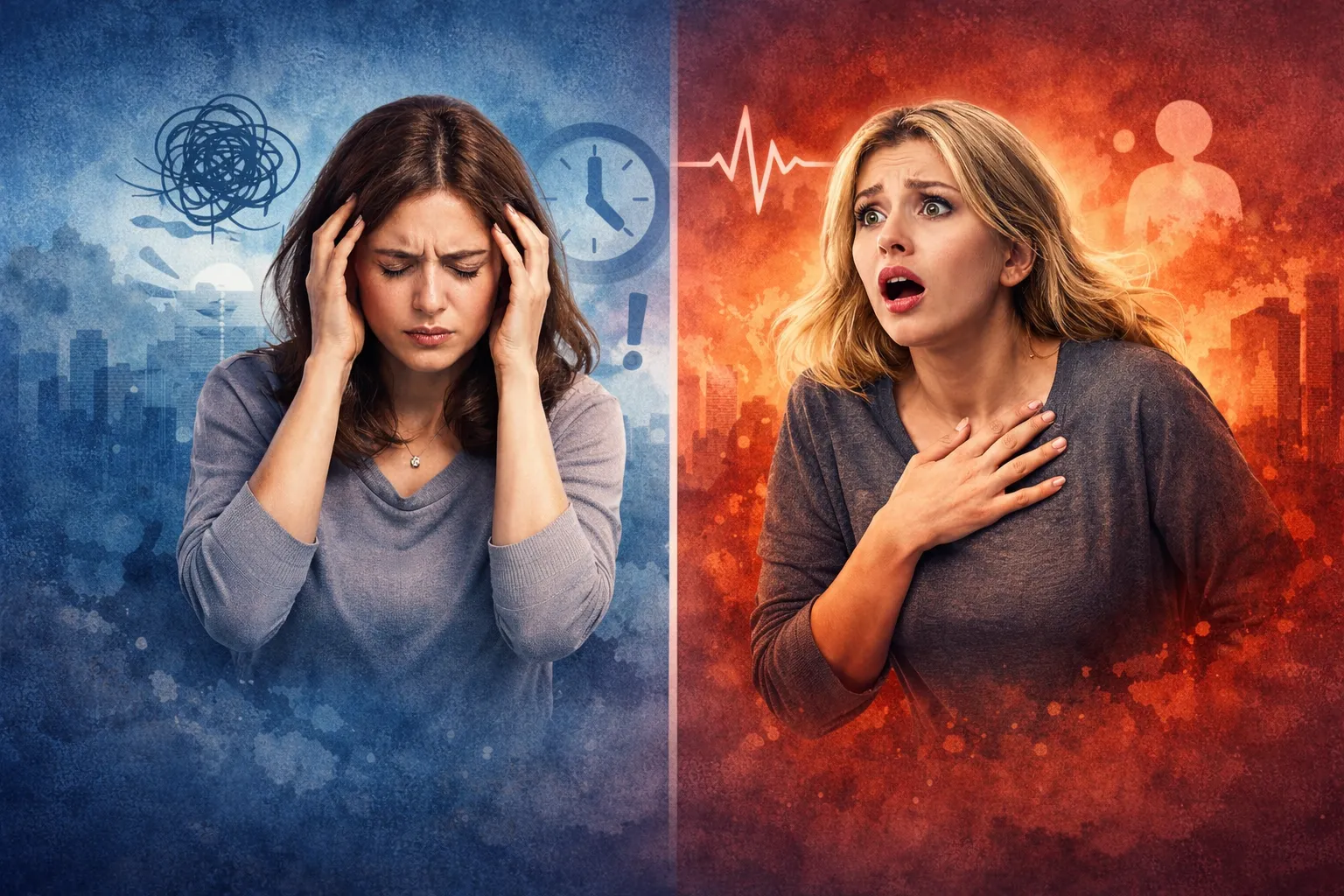

A comparison between an anxiety attack and a panic attack is done in terms of three factors: onset, intensity, and duration. Anxiety attacks are caused by increasing anxiety. Symptoms can include excessive worry about work, relationships, or other daily activities and may last for hours or days. Other physical symptoms include restlessness, racing thoughts, or a vague feeling of tightness in the chest. A panic attack is characterized by a rapid and spontaneous onset with sudden and intense fear that peaks within minutes.
Both can cause a fast heartbeat, shortness of breath and feeling faint. However, panic attacks in particular may feel very intense or severe. The feeling of impending doom or fear of dying or losing control is why people question if they are having a panic attack or a heart attack.
What Is an Anxiety Attack?
The term anxiety attack is used to refer to a period of elevated anxiety that builds over time. Although it is not mentioned in the DSM‑5, it is used by clinicians to refer to episodes of uncontrollable anxiety that affect people with generalized anxiety disorder, social anxiety disorder or separation anxiety disorder. Common features are excessive worry, imagining the worst, and feeling that a disaster is imminent.
The physical symptoms of panic attacks can include a racing heart, shortness of breath, shaking, sweating, and nausea. These symptoms can be real and unnerving, even if they are caused by stress and anxiety, and not an immediate physical threat. At Calm Minds Hub, we emphasize that anxiety attacks are treatable with stress reduction, mindfulness, and targeted therapeutic programs that help you reframe your thoughts and reactions.
What Is a Panic Attack?
A panic attack is a sudden episode of intense fear or discomfort that reaches a peak within minutes. It can occur with or without an obvious trigger and is a core feature of panic disorder, though it can also appear in other anxiety disorders. Typical panic attack symptoms include:
- Rapid heartbeat or palpitations
- Chest pain or discomfort
- Difficulty breathing or feeling smothered
- Trembling, sweating, chills, or hot flashes
- Dizziness, lightheadedness, or feeling faint
- Nausea or abdominal distress
- Derealization (feeling the world is unreal) or depersonalization (feeling detached from yourself)
- Fear of dying or going crazy
Some people have silent panic attacks. In these, symptoms are mainly internal. They might feel racing thoughts, intense fear, and physical sensations, but there are no visible signs. Because panic attack chest pains and a pounding heart can mimic a heart attack, many people rush to the emergency room.
How Anxiety and Panic Attacks Are Related
There is a close relationship between an anxiety attack and a panic episode. Both involve such emotional symptoms as fear, distress, and worry. They also present some physical symptoms which include a fast heartbeat, breathlessness and perspiration. Chronic anxiety in most instances may lead to panic attacks. Individuals who experience panic disorder or generalized anxiety disorder will complain that they have a lot of worries. This perpetual fear and anxiety predispose them to experience unexpected fear.
Key Symptoms of Anxiety vs Panic Attack
Analyzing the anxiety versus panic attack, it should be kept in mind that both of them possess various physical symptoms. Panic attacks can also come on suddenly and the symptoms are those of pain in the chest, the heart racing, difficulty breathing and shaking. These severe manifestations of the body could be so strong that the patient could develop a state of fear that could cause him/her to feel like he/she is losing control. Other typical symptoms of a panic attack also include sweating, chills and dizziness.
Anxiety attacks, on the other hand, are normally formed over a slow period and may be accompanied by continued feelings of physical discomfort or worry. Nausea or shaking are some of the physical symptoms, which can be similar to panic attacks. However, they tend not to be as severe and do not begin so abruptly. Excessive worry or fear may be caused by anxiety attacks. Nevertheless, they are not normally accompanied by the same level of panic disorders.
Anxiety Attack vs Panic Attack vs Heart Attack
Chest pain may cause one to confuse a heart attack and a panic attack. The sudden pain in the chest, which is accompanied by such symptoms as a rapid heartbeat, difficulty breathing, nausea, and light-headedness, is the result of a panic attack. These bodily manifestations usually cause confusion since they are similar to those of a heart attack. Nevertheless, panic attacks are commonly associated with severe anxiety or fear and usually rapidly develop within minutes and reach their maximum.
A heart attack occurs when the blood supply to the heart is obstructed. This leads to persistent chest pains and discomfort that does not disappear. The symptoms of a heart attack may also include sweating. You could have aching in your arm or jaw. It is always like there is a coming disaster. Contrary to panic attacks, such symptoms do not focus on anxiety signs.
The cause of anxiety attacks accumulates with time, which is normally as a result of stress or worry. They take a long time compared to panic attacks. Panic attacks on the contrary are abrupt and tend to be accompanied by nausea, shortness of breath and increased heart rates which reach their peak within minutes. One should be aware of these distinctions. They assist in the treatment of the symptoms and identification of the appropriate treatment. This is more so, in individuals with panic disorder.
Preventing Anxiety and Panic Attacks
Stop anxiety and panic attacks. Change your lifestyle, manage stress, and get support. One effective approach is mindfulness and deep breathing, which help calm the nervous system. Relaxation techniques help a lot. Progressive muscle relaxation is one. Guided imagery is another. Both lower anxiety. Regular physical activity reduces stress and boosts mood. This makes it a key part of any anxiety prevention plan. Cutting back on caffeine, alcohol, and other stimulants can help. This can stop anxiety symptoms from getting worse. Structured therapy and self-regulation techniques are important. They help you spot stress triggers. This lets you stay calm when anxiety strikes.
Early Warning Signs to Watch and Symptoms
Recognising the early warning signs of a panic attack or anxiety episode is key. It helps prevent the situation from getting worse. There are several subtle indicators to watch for that can signal the onset of an episode:
- Racing Heart or Chest Tightness: A sudden, noticeable increase in heart rate or a feeling of tightness in the chest can be a warning sign.
- Increased Sweating, Chills, or Trembling: You might see your body react. This could mean extra sweating, chills, or shaking.
- Mild dizziness, nausea, or shortness of breath can often happen during anxiety attacks. These symptoms can be unsettling.
- Sudden Feelings of Dread or Emotional Discomfort: You may suddenly feel intense fear. This can lead to a strong sense of dread or unease.
When you notice these signs or triggers, it’s important to take action right away. Grounding techniques can lower your symptoms. You can focus on your breath. Relaxation exercises also help. These strategies allow you to regain control and reduce the severity of the episode before it worsens.
Behavioral Strategies That Help
Behavioral strategies are powerful tools for managing anxiety and panic attacks.
- Deep breathing and mindful breathing to slow your heart rate
- Grounding techniques (e.g., naming five things you see, four you feel, three you hear)
- Coping mechanisms like journaling, exercise, or talking to a trusted friend
- Stress relief practices such as yoga, meditation, or relaxation therapy
At Calm Minds Hub, we recommend using these strategies. Pair them with professional mental wellness support. This gives the best long term results.
Professional Support and Therapy Options
Professional help is often essential for anxiety attack treatment and panic attack therapy. Common therapy options include:
- Cognitive behavioral therapy (CBT) to challenge distorted thoughts
- Exposure therapy for panic disorder and phobias
- Psychotherapy and relaxation therapy to build emotional regulation skills
Medications like SSRIs, SNRIs, or benzodiazepines may be used under the guidance of mental health professionals and psychiatric care providers.
Diagnosis and Treatment Options for Anxiety and Panic Attacks
A proper diagnosis checks your medical history. It includes physical exams. A psychological evaluation is also done. This helps rule out heart disease and other issues. For panic disorder or generalized anxiety disorder, treatment may include:
- Cognitive therapy and relaxation techniques
- Medication management with antidepressants or anti‑anxiety drugs
- Ongoing therapy sessions and mental health diagnosis
Final Thoughts
The difference between anxiety and panic attacks should be made. This assists in the selection of the most appropriate coping and management of these bitter experiences. The two conditions have some physical and emotional symptoms but they vary in terms of their onset, intensity and duration. You can manage anxiety. It may be gradually approaching or it may be suddenly approaching. Effective interventions are present. Discover stress relieving methods or therapy. The ability to control the mental state of people back in the hands of addressing the causes, creating preventive actions, and seeking assistance can bring the people under control. You can surely solve these problems with the assistance of the guidance and tools that you are going to require in Calm Minds Hub. You will not be left alone and you will be given the means and inspiration to be closer to living a healthier and well-balanced life.
FAQs
Is an anxiety attack the same as a panic attack?
No. An anxiety attack usually builds gradually in response to stress, while a panic attack comes on suddenly and is more intense, often without a clear trigger.
Can panic attacks cause heart damage?
Panic attacks themselves do not typically cause heart damage, but they can feel like a heart attack. If you have chest pain, shortness of breath, or other alarming symptoms, seek emergency care to rule out heart disease.
What is the 3-3-3 rule for anxiety?
The 3-3-3 rule for anxiety is a grounding technique: name 3 things you see, 3 sounds you hear, and move 3 parts of your body to calm your mind and bring focus back to the present.