




One should be familiar with schizophrenia vs schizoaffective disorder. This helps with diagnosis. The more well diagnosis is made, the more effective the treatment is. Psychosis is one of the characteristics of both conditions. But to a very large extent, they vary in their symptoms and mental health impacts. Schizophrenia brings about hallucinations. It brings delusions too. Confused thinking is common. All these complicate everyday life. These symptoms are included in schizoaffective disorder. It also has strong mood symptoms. These can be depression or mania. Mood swings make schizoaffective disorder unique. This adds to its complexity. It needs careful checks. Good management is key. A proper psychiatric diagnosis is key. It helps create the right treatment plan for those affected. This plan should address both schizophrenia symptoms and any mood disorders present.
Understanding Schizophrenia and Schizoaffective Disorder
Schizophrenia is a serious mental illness. It changes how a person perceives, thinks, and behaves. It usually appears in late adolescence or early adulthood. Typical psychosis includes hearing voices. It can also mean seeing things that aren’t real. People may strongly believe in false ideas, even when shown proof they are wrong.
Schizoaffective disorder is a serious mental illness. It has psychotic features. It also includes mood episodes. These can be depressive, bipolar, or mixed. For example, a person might see or hear things that aren’t there. This can happen during a long depressive episode or during mania. Mania means high energy, little sleep, and risky behaviour.
Both conditions can greatly impact social roles, school or work performance, and self-care. They are part of the wider group of psychotic disorders. At Calm Minds Hub, we highlight the importance of noticing early warning signs. Small changes in thinking, mood, or behaviour matter. When individuals and families seek help quickly, they often see better outcomes.
What Sets Schizophrenia VS Schizoaffective Disorder Apart?
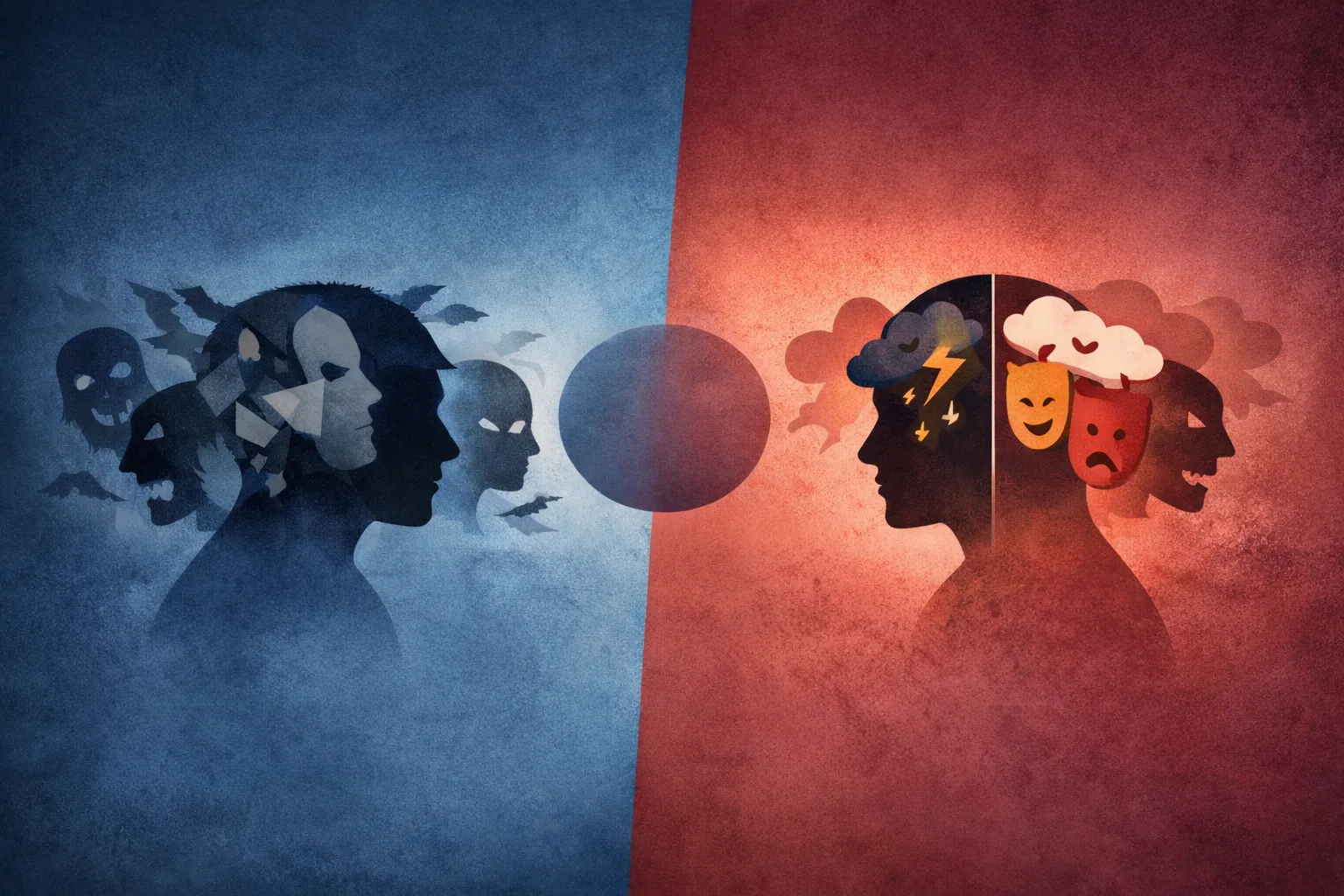
The main difference is about mood. In schizophrenia, mood issues are less important. In schizoaffective disorder, they matter more. In schizoaffective disorder, a major mood episode is needed. This can be either depressive or manic. It must last for most of the illness. There should also be at least two weeks of psychosis without mood symptoms.
In schizophrenia, psychotic symptoms are key. These include hallucinations and delusions. Mood episodes can happen too, but they don’t take over. This makes diagnosis tough in real life. Clinicians need to track symptom patterns over time, not just during one visit.
Treatment options vary. Schizophrenia is treated with antipsychotics. It also uses therapies and rehab support. Schizoaffective disorder needs antipsychotics too. It often needs mood stabilisers or antidepressants for mood issues. Calm Minds Hub points out this detail. It helps readers ask clearer questions. They can better understand their diagnosis and treatment in psychiatric consultations.
Where the Two Disorders Overlap
Schizophrenia and schizoaffective disorder share many overlapping symptoms, making distinctions challenging. Both can lead to hallucinations and delusions. People may also have disorganized speech. They might struggle with daily tasks too. Negative symptoms include less emotional expression and low motivation. Social withdrawal can also occur. These symptoms happen in both disorders. They can cause problems with daily life. People with schizoaffective disorder often have strong mood swings. They can feel very depressed or very manic. In schizophrenia, mood changes can be milder. This makes it hard to see clear boundaries between the two.
Misdiagnosis is common between schizophrenia vs schizoaffective disorder. Their symptoms can look alike. This is especially true early on when patterns aren’t clear. Calm Minds Hub wants you to review your symptoms often with mental health teams. This helps improve diagnoses. It also allows for treatment changes as you learn more.
Causes and Risk Factors
The causes of schizophrenia and schizoaffective disorder are unknown. They may come from genetics. They might also be linked to brain development and stress from the environment. Family studies show a higher risk. This is true for close relatives with schizophrenia. It also applies to those with schizoaffective disorder or bipolar disorder.
Risk factors for schizoaffective disorder are similar to those for schizophrenia. They include:
- Genetic vulnerability
- Early life adversity
- Possible disruptions in brain circuits that affect mood and reality testing.
Using substances like cannabis or stimulants can lead to psychosis. This looks like schizophrenia. It can also make symptoms worse for vulnerable people.
How Mental Health Experts Diagnose Each Condition
Mental health experts diagnose schizophrenia and schizoaffective disorder. They use clear rules. They ask questions in interviews. They watch patients for a long time. A psychiatrist or trained clinician gathers important information. They check symptoms and substance use. They also look at medical issues and family mental health. This makes the diagnosis clearer.
To diagnose schizophrenia, a person needs at least two main symptoms. These can be delusions or hallucinations. They might also include disorganized speech, disorganized behaviour, or negative symptoms. There should be a drop in social or work functioning. The symptoms must last for at least six months.
For schizoaffective disorder, the criteria are:
- A major mood episode plus psychotic symptoms.
- Mood symptoms must be present for most of the illness.
- There should be at least one clear period of psychosis without mood symptoms.
Diagnosis can be hard. Mood symptoms and psychosis change a lot. Brief assessments might miss important patterns. Calm Minds Hub says to bring symptom journals and family info to doctor visits. This helps psychiatrists use their tools better.
Treatment Approaches and Long‑Term Management
Schizophrenia and schizoaffective disorder use antipsychotics for treatment. These medicines help with hallucinations and delusions. They also clear up confused thinking. Support from others is key, too. In schizoaffective disorder, doctors can add mood stabilisers. They can also add antidepressants. This depends on the type: bipolar or depressive.
Long-acting injectable antipsychotics help patients stay on track with treatment. They can lead to better long-term remission. This is true for some people with schizophrenia or schizoaffective disorder. Psychosocial interventions help. They are:
- Psychoeducation
- Family therapy
- Cognitive-behavioural approaches
- Supported employment
These methods improve function. They cut relapses. They work well with medication.
Treatment plans should adapt over time. They need to change with life events, health needs, and personal goals. Regular follow-up with healthcare providers is essential. Calm Minds Hub stresses the need for easy access to healthcare. It supports teamwork among psychiatrists and other healthcare workers. It also calls for stigma-free spaces. These spaces help recovery and allow for meaningful roles in the community.
Final Thoughts
Schizophrenia vs schizoaffective disorder are not the same. They change how people see things. They also affect the treatments people receive. Both are serious mental illnesses. With early help and ongoing treatment, many people can improve. Good healthcare access also boosts stability and quality of life.
Knowing the early warning signs is important. Understanding stress triggers and medication effects also helps. This way, people can take an active part in their treatment. At Calm Minds Hub, we promote mental health education. This helps individuals and families speak up for effective treatment. It also builds lasting emotional stability.
FAQs
Can Schizophrenia Be Cured?
Ongoing treatment for mental illness matters. Antipsychotic medicine helps. Therapy is important. Social support also helps. Together, they keep people well and help them rebuild their lives.
Is Schizoaffective Disorder a Severe Mental Illness?
Yes, schizoaffective disorder is a serious mental illness. It has both psychotic symptoms and major mood episodes. These can affect work, relationships, and daily life.
Is Schizoaffective Disorder a Type of Schizophrenia?
Some experts say schizoaffective disorder is part of the schizophrenia spectrum. Others say it is separate. Current diagnostic systems treat it as its own condition.