


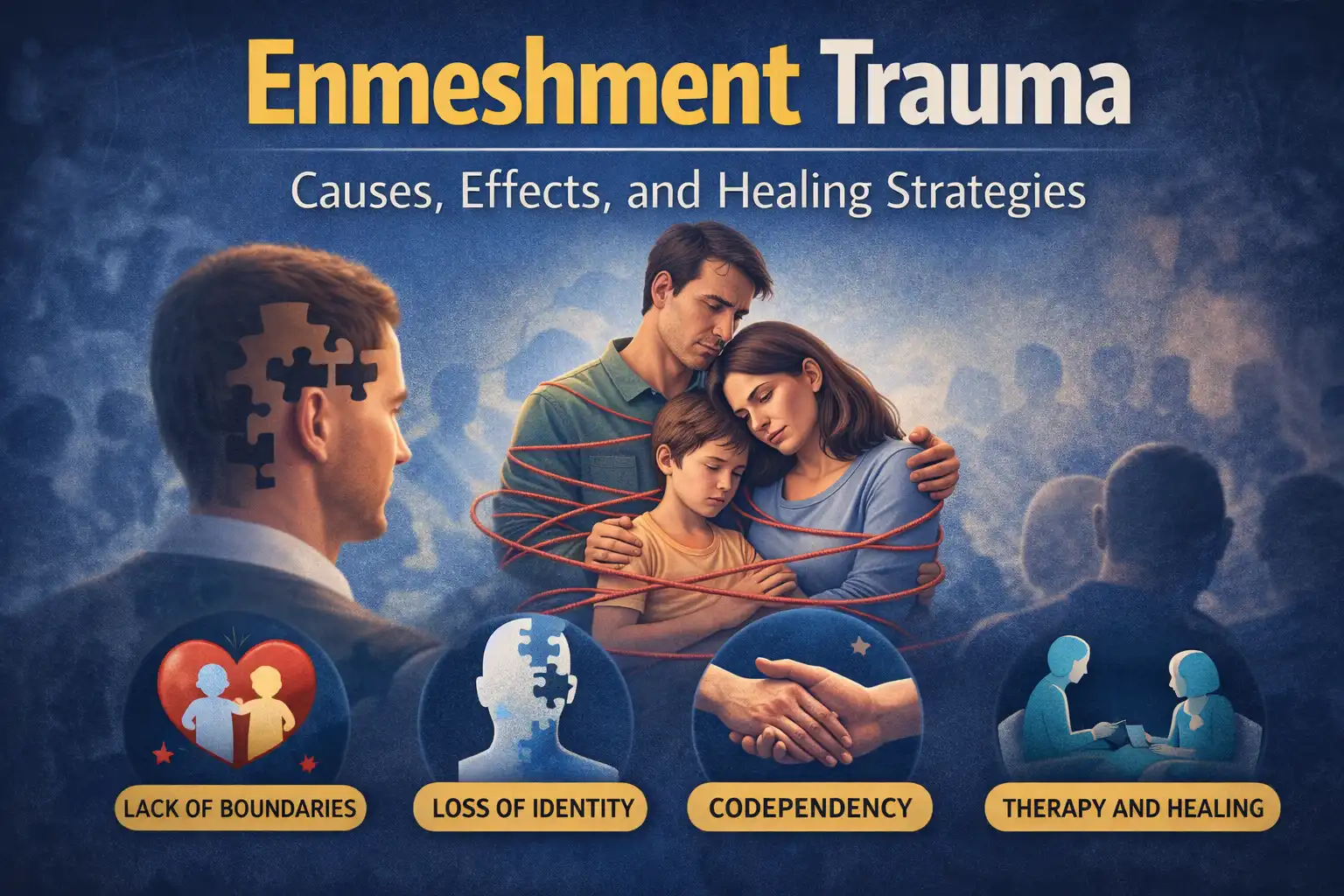

Enmeshment trauma refers to a situation in the family where there are no clear boundaries. This contributes to the over-involvement of members emotionally. Individuals tend to believe that they do not have personal space. They can also have difficulties in developing a healthy self-image. Such trauma normally arises out of too much emotional attachment. It may lead to confusion of identity and difficulty in expressing individual needs. This is visible in families whose problems are unresolved or families with strict coping styles. These have the capacity to stifle emotional development. Calm Minds Hub assists people in identifying enmeshment trauma symptoms. We pay attention to healing through self-awareness and establishing healthy boundaries.
What is enmeshment trauma?
Enmeshment trauma is a relationship trauma. It occurs in families that have ambiguous boundaries. In such families, the family members have too much involvement in the lives of one another. This usually causes emotional over-involvement. Human beings are usually struggling to establish their identities. It is so because they derive their self-worth through family approval. Individuals combine with family needs and feelings. This complicates the ability to distinguish your emotions and desires.
Signs of Enmeshment Trauma
Enmeshment trauma symptoms may take several emotional and relational patterns. Emotional dysregulation is a characteristic symptom of enmeshment trauma. This implies that individuals are not able to control their emotions. They can alternate between radical emotions. Other indications are relational instability. Human beings struggle to maintain healthy relations. The latter is a frequent occurrence due to personal boundaries and the violation of boundaries. These symptoms have the capability to damage self-esteem and self-worth. This can result in anxiety and depression. Managing the enmeshed relationships is something on which people find it difficult to cope.
Lack of Boundaries
Lack of boundaries can be caused by enmeshment trauma. Family members grow to have strong emotional bonds among themselves. This has the potential of creating boundary problems. This is more so in the emotional mesh trauma between mothers and sons or mothers and daughters. In the long-run, the loss of demarcation is detrimental to personal space and emotional well-being. This may cause permanent attachment traumas.
Feeling Responsible For the Feelings of a Parent
In enmeshment trauma, one, particularly children, tends to feel guilty of their parents. This brings about codependency between children and parents. Children come out to bear emotional weight that is not theirs. Emotional reactivity is always damaging to emotional health. It tends to put individuals in unhealthy ruts.
Lack of Privacy
A key symptom of enmeshment trauma is the lack of privacy. Family members may feel like they are always being watched. This can cause enmeshment trauma. It often leads to unstable relationships and confusion about personal boundaries. Family dynamics can lead to over-sharing. This affects how we see ourselves and makes it tough to keep our own identity.
Avoiding Conflict
People with enmeshment trauma tend to avoid conflict at all costs. Fear of upsetting family dynamics often stops them from sharing their true feelings. Enmeshment trauma often shows up in mother-son relationships. Here, keeping the peace matters more than self-esteem or healthy emotional expression.
Lack of Identity Outside Your Family
A person with enmeshment trauma often struggles. They find it hard to have an identity separate from their family. They struggle to build their self-concept. This is tough in romantic relationships or with a narcissistic family member.
Complicated Interpersonal Relationships
Enmeshment trauma makes relationships harder. It causes strong emotions and codependency. Over time, family dynamics can get complicated. This often makes it hard to build healthy, balanced relationships.
Enmeshment trauma symptoms
In Calm Minds Hub, we know that the symptoms of enmeshment trauma may manifest themselves in a variety of ways. They influence the emotional health and identity. The typical symptoms include chronic anxiety, depression, and the inability to have a clear sense of self. Enmeshed individuals can have problems with controlling their emotions and wobbly relationships. It is difficult to establish healthy boundaries and have balanced relationships. These symptoms are usually the result of enmeshment trauma abuse. It is very important to find support and to address these emotional problems and begin the healing process.
How to Heal from Enmeshment Trauma
Enmeshment trauma can only be healed multifactorially. This trauma is commonly an outcome of complicated family relations. It leads to both emotional and psychological damage. Such treatments as EMDR and Somatic Experiencing are able to assist. They help in trauma reprocessing and deactivation of adhesive feelings.
The mindfulness practices assist people to make them aware of their feelings and separate them. Assertive Communication and Self-Attunement give people the ability to establish healthy limits. The process of healing enmeshment trauma is a lifelong process. It involves developing a Coherent Narrative of the life that one lived, reclaiming an identity and creating space to express oneself. In Calm Minds Hub, we invite people to pursue healing journeys that would promote independence and self-esteem.
Why Does Enmeshment Trauma Happen?
Enmeshment trauma occurs when family boundaries are unclear. It leads to too much emotional involvement. This can result from generational trauma, where harmful dynamics pass through families. The coping methods formed under stress can block secure attachments. This makes it hard for people to build independent identities and healthy relationships. At Calm Minds Hub, we focus on attachment theory to help individuals recognize and heal from enmeshment trauma.
The Effects of Enmeshment Trauma
Calm Minds Hub examines the effect of enmeshment trauma on emotional and relational health. It usually leads to emotional instability and poor relationships. People can experience difficulty in establishing healthy relationships. This may cause identity misunderstanding and great fear of confrontation. Consequently, it becomes difficult to be selfish or establish limits. Self-esteem may be damaged as well since most rely on others to be validated. This may result in dependency on personal and romantic relationships.
Fear of Conflict
People often feel strong emotions and find it hard to express themselves. Codependency can stop them from sharing their true feelings and setting healthy boundaries.
Difficulty In Relationships
Enmeshment trauma can hurt relationships. This is especially true when codependency and family issues are involved. Many people struggle with emotional ups and downs. This can lead to unstable relationships. As a result, building secure attachments in close relationships can be tough.
Low Self-Esteem
People with enmeshment trauma often have low self-esteem. This happens because they rely too much on others for their sense of self. Healing from enmeshment trauma means getting back your self-worth. This is key for your identity. It also helps with emotional wellness.
Lack of Identity
A common symptom of enmeshment trauma is the lack of identity outside the family. This leads to identity confusion as people struggle with self-concept and psychological development. They often rely on others for a sense of who they truly are.
Conclusion
Enmeshment trauma is a process of self-discovery and personal development. It is worth observing the impact of this trauma on you. The knowledge of mental health recovery is the key to healing. We at Calm Minds Hub are sure that people can get out of the enmeshment trauma. The real empowerment can be achieved with hard work and encouragement. With the right support and tools, individuals can rebuild their lives and create healthier, more fulfilling relationships. This journey of healing requires patience, self-compassion, and a commitment to personal growth, but it is entirely possible to break free from the patterns of enmeshment and cultivate a life of emotional independence and balance.
FAQs
What is the pattern of enmeshment?
Enmeshment is a family dynamic where boundaries are blurred. In this state, people rely too much on each other for their feelings and self-esteem, often leading to unhealthy emotional dependence.
How do you overcome enmeshment?
To overcome enmeshment, people need to set clear boundaries. They should reclaim their identity, seek therapy to heal, and work on building healthier, more independent relationships.
What is enmeshment?
Enmeshment is a family dynamic where boundaries are blurred. In this state, people rely too much on each other for their feelings and self-esteem, often losing their sense of individuality.