



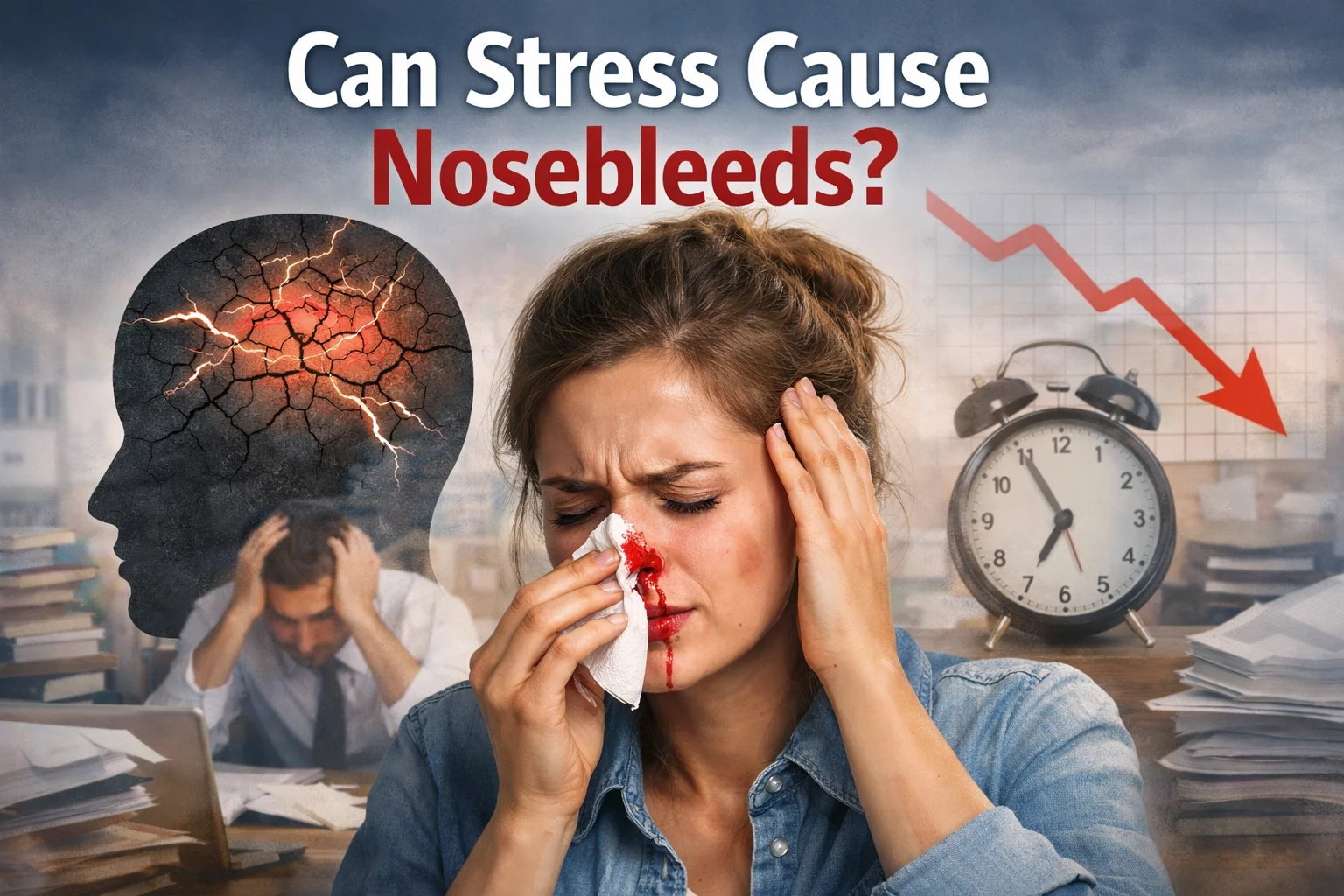

Have you ever wiped your nose when you are on a hectic day and you suddenly realized that blood was trickling? Very many people pose the question, can stress make the nosebleed? They can blame such unexpected events for the increased stress. We explore the relationship between mental strain and physical response in Calm Minds Hub. This helps the readers in grasping these associations with clear scientific explanations. The brochure will look at the meaning of stress, the effects of stress in the body, and how one can break the cycle. With this knowledge of such relations, you can transform your day-to-day needs.
Stress and Its Role in Triggering Nosebleeds
Stress is the survival mechanism of a body, its alarm. Nevertheless, what does stress mean in the world today? It is triggered in circumstances where the demands surpass the coping resources, overwhelming the system with hormones. The acute stress puts one on alert temporarily, and this helps in performance. Chronic ones, in their turn, destroy health without noise, causing chronic inflammation and impaired immunity. Calm Minds Hub states that emotional problems and physical ones, such as headaches, are symptoms of stress. Early detection eliminates the development of complications, and complications like nosebleeds.
Key aspects include:
- Hormonal surges like cortisol, which regulate energy but overstay in excess.
- Nervous system overload, heightening sensitivity to stimuli.
- Behavioral shifts, such as grinding teeth or clenching jaws.
Stress Symptoms Beyond Nosebleeds
The stress symptoms go way beyond the nosebleed, giving us a complete picture of a strained system. Cortisol causes digestive problems such as acid reflux. Nighttime insomnia is a curse since daydreaming invades sleep. The emotional volatility, anxiety, and outbursts are indicators of overload.
Calm Minds Hub categorizes these for clarity:
- Physical: Stress headache, jaw pain, elevated blood pressure.
- Cognitive: Foggy focus, forgetfulness under pressure.
- Behavioral: Appetite changes, withdrawal from social circles.
Addressing them holistically curbs nosebleed triggers.
How Does Stress Lead to Nosebleeds?
This stress-to-nosebleeds process occurs in a subtle but strong manner. Stress causes the nasal linings to become dry because it diverts the moisture to other body parts. This weakness will provoke tears in small anterior vessels, frequent locations of the bleed. Aggressive rubbing or blowing of the nose in stressful times hastens pain.
Calm Minds Hub notes that stress may be enhanced by low humidity. This combination usually contributes to the increase in the number of incidents. Anxiety causes shallow and rapid breathing that continues to dry the passages. Vascular changes matter too. Stress constricts the blood flow and consequently empties it. This has the potential of straining sensitive capillaries.
How Stress Affects Your Body and Nosebleeds
More generally, physiology is affected by stress on the top of the nose. It speeds up the heart and blood pressure, which strains circulation. The vessels that are broken by such pressure are nosebleeds. It is normally accompanied by a headache of stress and pain as it is associated with compressed muscles and bursting blood vessels. What are the systemic effects of stress? It suppresses digestion, elevates the level of inflammation, and disrupts sleep, as it is a vicious cycle.
Calm Minds Hub outlines these interconnected effects:
- Immune dips increase sinus vulnerability.
- Muscle tightness in the face and neck pinches the nasal supply.
- Adrenaline bursts mimic hypertension symptoms.
Medical Conditions that can Cause Nosebleeds
Although stress is a contributory factor, there are other culprits who are in demand. The nosebleeds in the anterior part usually have an origin in trauma or dryness. Back pain is indicative of underlying problems. These may be high blood pressure, which is another stress symptom, or blood-clotting issues. Swelling of tissues is an attraction to bleeding due to allergies. Risk-compounding medications like aspirin thin the blood.
Calm Minds Hub stresses professional evaluation:
- Deviated septa obstruct airflow, drying one side.
- Infections inflame and erode linings.
- Rare tumors or polyps require imaging checks.
Common Myths about Stress and Nosebleeds
Misconceptions cloud the stress-nosebleed link. Myth: Stress alone causes all bleeds; no, it amplifies vulnerabilities. Nosebleeds don’t always mean high blood pressure. They can happen, especially if stress is involved.
Calm Minds Hub debunks these:
- It’s just allergies: Stress worsens allergic responses.
- Ignore minor bleeds: Recurrent ones tie to chronic stress.
- Only kids get them: Adults under stress report equally.
Facts over fiction guide better management.
When Stress Triggers Nosebleeds and the Science Behind It
Peer-reviewed studies illuminate the science. Can stress cause nosebleeds via neuroendocrine paths? Cortisol chronically elevates, thinning mucus barriers. Neuroimaging shows stress activates the HPA axis, flooding vessels with pressure spikes. This dilation-constriction cycle ruptures Kiesselbach’s plexus easily. Calm Minds Hub cites longitudinal data: high-stress groups report 30% more epistaxis episodes. Can stress cause nosebleeds in acute forms, too? Yes, panic attacks mimic sudden surges. A stress headache follows a similar pattern. Tension moves from the temples to the nasal bridge.
Lifestyle Factors Amplifying Stress and Nosebleeds
Every day habits increase the risk of nosebleeds caused by stress. Improper nutrition that is rich in caffeine increases cortisol irregularly. The inactive habits of the body tighten the neck muscles, directing the strain to the facial vessels. The overload of the screen puts a strain on the eyes and makes the air.
Calm Minds Hub identifies top amplifiers:
- Smoking irritates the linings directly.
- Alcohol dehydrates, mimicking stress dryness.
- Irregular meals destabilize blood sugar, echoing pressure surges.
Tweaking these reduces baseline vulnerability.
When to Seek Medical Help for Nosebleeds
Not all bleeds need alarm, but patterns warrant checks. Frequent episodes (over twice weekly) signal underlying stress or conditions. Heavy flows lasting 20+ minutes demand urgency.
Calm Minds Hub advises:
- Accompanied by dizziness, bruising, or stress headache.
- Post-injury or one-sided persistence.
- In children or with medications.
Prompt care prevents complications.
Tips for Preventing Nosebleeds by Reducing Stress
Prevention blends stress reduction with nasal care. Calm Minds Hub curates these evidence-based tactics:
- Breathing exercises: The one to use is the 4-7-8 method. Inhalation 4 seconds, suspension 7, and exhalation 8. This can lower cortisols within a short time.
- Fluid buildup Oncotic fluid: Take 8-10 glasses/day of water, saline sprays instead of water every 2 hours.
- Mistify the air: Cool-mist machines are to be applied during the night, and the goal is to achieve a humidity of 40-60 per cent.
- Meditation: 10 minutes uses train mindfulness, which removes the damage caused by stress, like headaches.
- Physical stores: Endorphins can also be emitted through yoga or brisk walks that triumphs what is accumulating stress.
- Nares care: Petroleum jelly in small amounts, never pick during stressful situations.
- Nutrition changes: fish omega-3 helps vessels to be stronger; salt must be maintained at a constant level to keep pressure.
- Sleep hygiene: 7-9 hours of daily rest for body tissues that are fatigued and exhausted after a stressful day.
Track patterns in a journal for personalized tweaks.
Can Stress Cause Nosebleeds in People with Preexisting Conditions?
Preexisting issues magnify stress’s impact. Asthmatics endure compounded inflammation from stress-induced breathing changes. Can stress cause nosebleeds here? Definitely, hypertensives see pressure peaks overwhelm vessels. Allergics face double dryness.
Calm Minds Hub tailors advice:
- Diabetics monitor blood sugar swings, as stress spikes glucose and increases fragility.
- Patients with clotting disorders pair anticoagulants with relaxation protocols.
- Sinusitis sufferers combine decongestants with stress logs.
Consult specialists for integrated plans.
Conclusion
Understanding questions like “Can stress cause nosebleeds” highlights how stress affects health. It connects small signs, like irritability and fatigue, to serious problems. These include sudden nosebleeds and strong headaches. Calm Minds Hub is the top place for trustworthy insights on stress. It explains what stress is, its triggers, how it works, and how to manage it. The Hub offers effective paths to gaining mastery over stress. These strategies help people create strong resilience to mental stress and its physical impacts. Visit Calm Minds Hub regularly for fresh tools and updated research.
FAQs
Can stress cause nosebleeds in children?
Stress dries kids’ nasal passages due to cortisol. You can counter this with play-based relaxation and humidifiers.
How does stress contribute to nosebleeds?
Stress elevates cortisol and blood pressure, drying membranes and weakening vessels, making them more likely to rupture.
Is it possible for chronic stress to cause long-term nosebleeds?
Chronic stress sustains inflammation and dryness, fostering recurrent bleeds without intervention.