



Can anxiety cause diarrhea? Anxiety is often known to have numerous impacts on an individual, both psychologically and emotionally, but its physical effects are less understood. Diarrhea, for instance, is a physical symptom not directly linked to anxiety for many. The connection between the psyche and digestive complications like gastrointestinal distress is not widely recognised. However, understanding how anxiety can lead to or aggravate such symptoms can help individuals better manage and cope with the discomfort it causes.
Our mission at Calm Minds Hub is to make people aware of this important subject and shed some light on how anxiety can influence the digestive system, which may lead to symptoms such as diarrhea and give information on some practical ways to minimise the unpleasant experiences. Having a deeper understanding of such a relationship, individuals will be better equipped to fight the psychological and physiological elements of anxiety to improve their overall health and life quality.
What is anxiety Diarrhea and how does it affect the body?
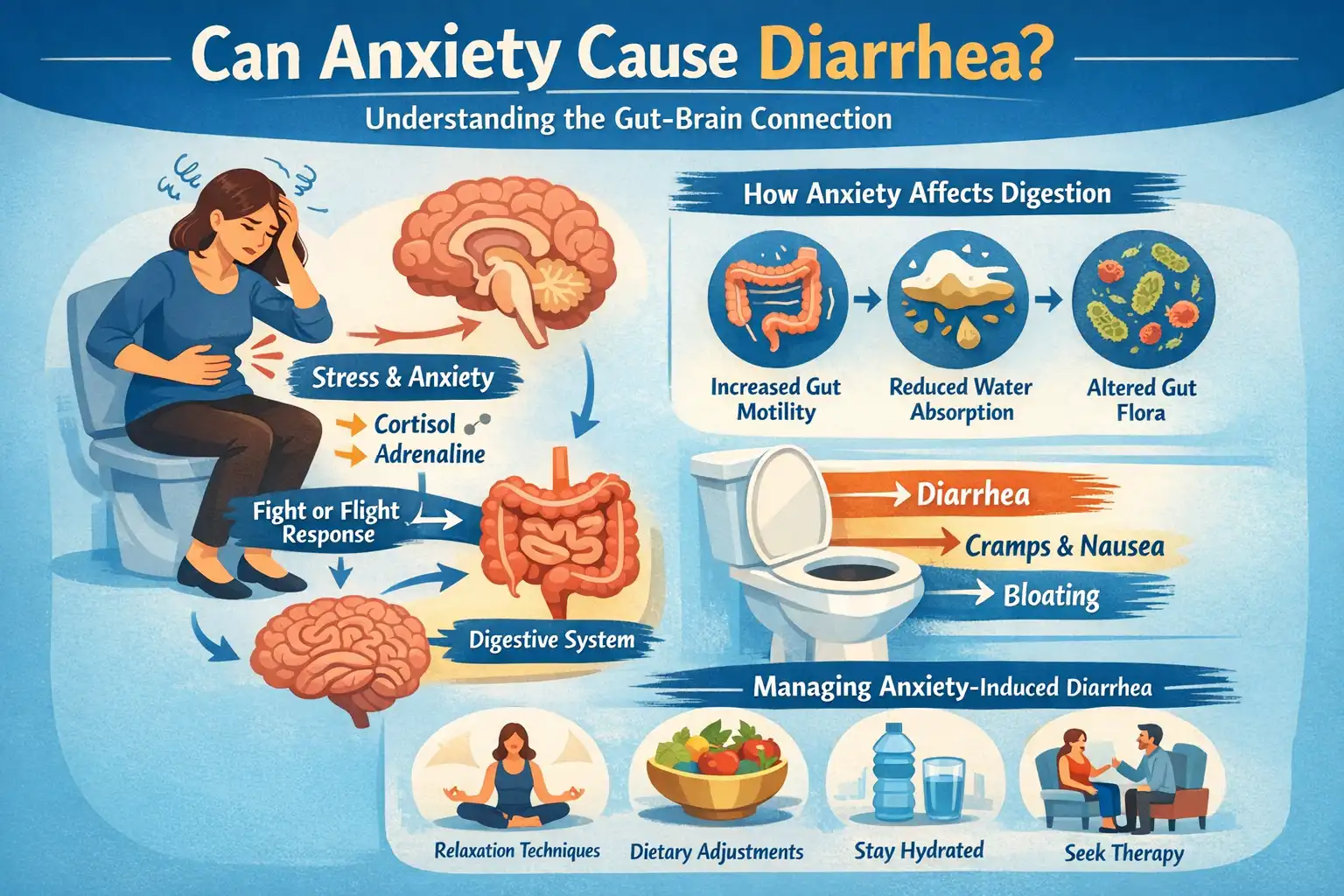
One of the physical effects of anxiety is anxiety diarrhea that may directly affect the digestive system. It is a disease that is noticed when gut motility is exaggerated as a result of the fight or flight response, which is induced by nervousness. In the cases of the active nature of the digestive system, it may result in loose stools or diarrhea. The gut-brain axis is a communication system in the brain-gut that plays a significant role in this process. Anxiety and stress imbalance on this axis and in most situations, gastrointestinal disorders such as diarrhea, bloating and nausea occur. Calm Minds Hub is conscious of the fact that knowing about such relationships is significant so that one can treat and manage the symptoms relating to anxiety.
Can anxiety cause Diarrhea?
Anxiety does cause diarrhea. Under stress, there is a release of stress hormones (cortisol and adrenaline) and a direct effect on the digestive system occurs. These hormones increase the motor activity of the gut, which leads to a rise in the transit time in the digestive tract. This causes the colon to be unable to absorb adequate water in the stool, hence making the stool loose or liquid. The gut-brain connection highlights why emotional pain can be manifested via issues of the gastrointestinal tract, including diarrhea. It is because of this that codependency on professional assistance is emphasised at Calm Minds Hub so that the psychological and physical aspects of anxiety can be targeted.
How stress and anxiety impact the digestive system
The digestive system is disturbed by stress and anxiety. They secrete hormones on gut motility. These hormones also alter the gut permeability and gut flora balance. When the body responds to stress, it becomes more sensitive to the gut. It implies that individuals will be more conscious of the digestive processes that they do not pay much attention to. In the event of the chronic nature of anxiety, the symptoms of diarrhea, nausea, and bloating may be experienced. Good digestion and health will also depend on the management of the psychological and physical aspects of anxiety.
Common digestive symptoms linked to anxiety
Anxiety and stress cause digestive symptoms. The most common ones are nausea, bloating, abdominal discomfort, and diarrhea. It is the reaction of the body to stress that causes these symptoms, which affects the stomach motility and the digestive processes. Patients with anxiety disorders, such as irritable bowel syndrome (IBS), may also have extra stomach issues. These are the problems that are very common among them. CBT is applied to anxiety. Stress relievers also come in handy. They both can minimise physical symptoms. It can also increase digestion.
Can anxiety cause diarrhoea without other symptoms?
Otherwise, in other instances, there can be diarrhea as a result of anxiety and not other noticeable symptoms. This is particularly so when an individual has anxiety. Other common signs may not be evident in them. These symptoms are increased heart rate or tension in the muscles, which are often associated with the symbol for anxiety. Nevertheless, the reaction of the body to the anxiety may also lead to digestive problems even without other symptoms. The gut-brain axis is key here. Even the mild form of anxiety may cause the digestive system to react and result in diarrhea.
Difference Between Anxiety-Related Diarrhea and Other Digestive Issues
Anxiety diarrhea differs from other digestive complications. Other issues may be through infections or diet. The main difference is in the precipitating factor, which is anxiety or stress. Diarrhea occurs as a result of anxiety. It is often of no apparent physical origin. Calm Minds Hub helps individuals identify digestive issues that appear because of anxiety. We also enlighten them about other health problems. By so doing, they are able to receive the appropriate treatment. Additionally, can anxiety cause diarrhea and vomiting? Yes, anxiety can lead to both diarrhea and vomiting as part of the body’s response to stress, highlighting the complex connection between emotional distress and physical symptoms.
How long does anxiety-induced Diarrhea last?
The time of diarrhea caused by anxiety may differ. The diarrhea due to anxiety, in most cases, will disappear once the stressful situation or event is over. In individuals with persistent anxiety, intestinal complications might persist, and, therefore, they may require constant treatment.
How to Manage Anxiety When Diarrhea Occurs
In the case of anxiety-induced diarrhea, it is necessary to treat both the physical and psychological state of the situation. Mindfulness practices are useful in reducing stress. Stomach problems can be rectified through deep breathing and meditation. Also, drink plenty of water. An increase in the consumption of foods rich in fibre would help. This is able to control bowel movements and relieve diarrhea. Seek professional mental assistance. Such therapies as cognitive behavioural therapy (CBT) and dialectical behaviour therapy (DBT) are effective. They address the overall causes of anxiety. This is able to provide permanent relief.
Dietary Tips to Reduce Anxiety-Related Diarrhea
The dietary changes would be useful to manage the diarrhea that is a result of anxiety. The high-fibre foods such as oats, bananas and apples are able to control bowel movements and therefore should help in reducing diarrhea. Such irritants as caffeine, alcohol, and fatty foods can be avoided to prevent digestive distress. One should also be hydrated in case of loss of fluids due to diarrhea. Add more fibre bit by bit. Choose your foods with care. Anxiety and digestive problems can also be treated with it.
Final Thoughts
Calm Minds Hub will focus on the need to assist people struggling with anxiety and how it affects their digestive systems. Anxiety may have a heavy toll on the digestive system, such that it causes problems such as diarrhea and other gastrointestinal pains. It is essential to know how the brain and the gut are related because fear and stress may have a direct impact on the functioning of the digestive system. The management of both psychological and physical conditions of anxiety will lead to people being better prepared to cope with the symptoms and improve the condition of the whole digestive system.
There are cognitive behavioural therapy (CBT), dietary changes, and effective stress management methods, all of which are types of therapy that are essential in reducing the impact of anxiety on the digestive system. With the help of the right course of medication, patients will be able to manage their anxiety, which will lead to a positive alteration of their psychological and intestinal state. The initial process that leads to a holistic approach in treatment and guarantees that permanent relief has been achieved is the identification of the consequences of anxiety on the digestive activities occurring in the body.
FAQs
How to stop diarrhea caused by stress?
To help with stress diarrhea, try relaxation techniques. Use deep breathing. Do meditation. Try progressive muscle relaxation. Additionally, consider dietary changes, staying hydrated, and seeking professional mental health support.
What 12 foods stop diarrhea?
Foods that can help stop diarrhea include bananas, applesauce, white rice, toast, potatoes, yoghurt, oatmeal, chicken broth, boiled carrots, and cooked apples. These foods help firm up stool and provide essential nutrients.
Can anxiety cause thin stools?
Anxiety can change stool consistency. Stress and anxiety hormones disrupt the digestive system, which may lead to thin stools. Managing anxiety can help normalise bowel movements.