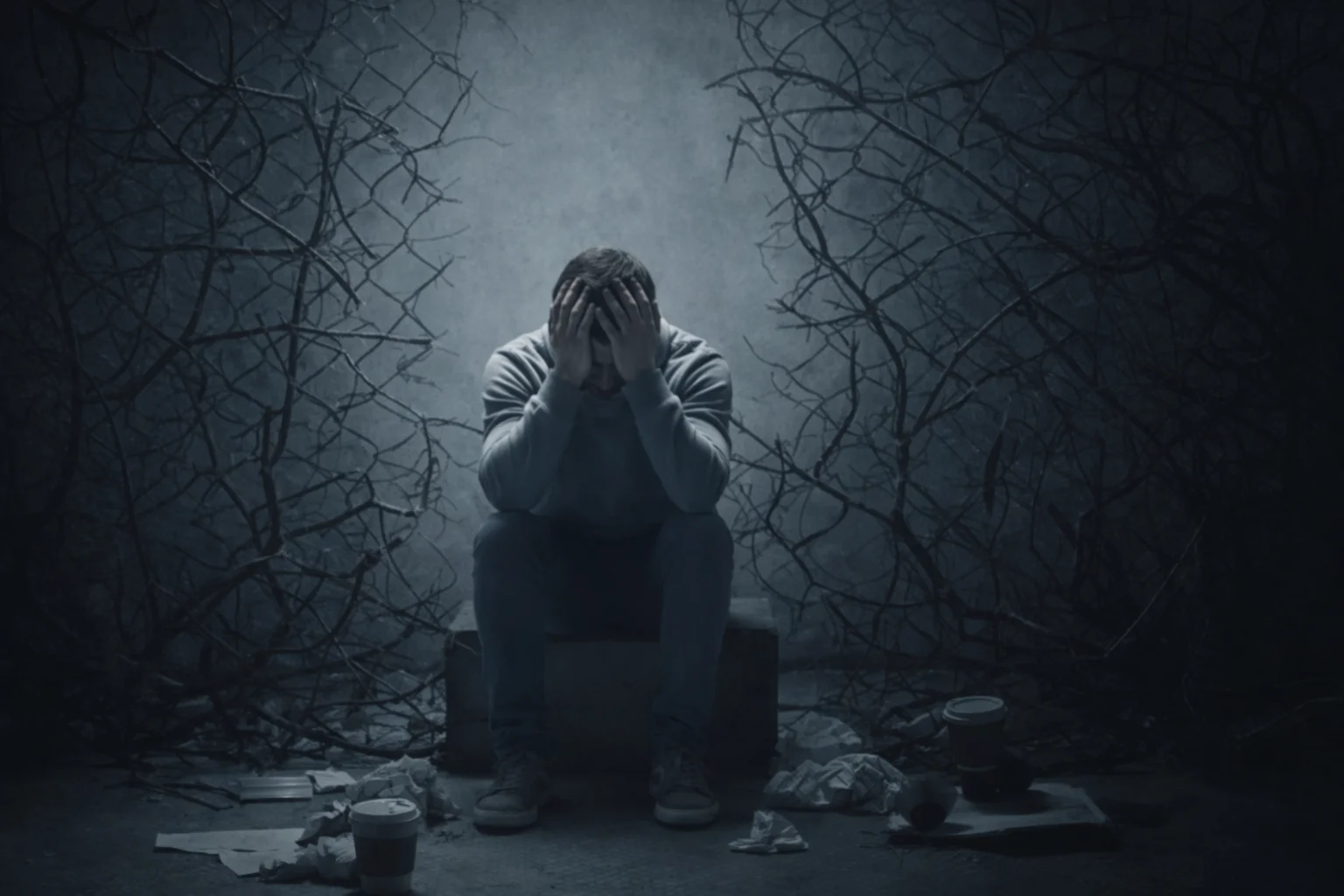
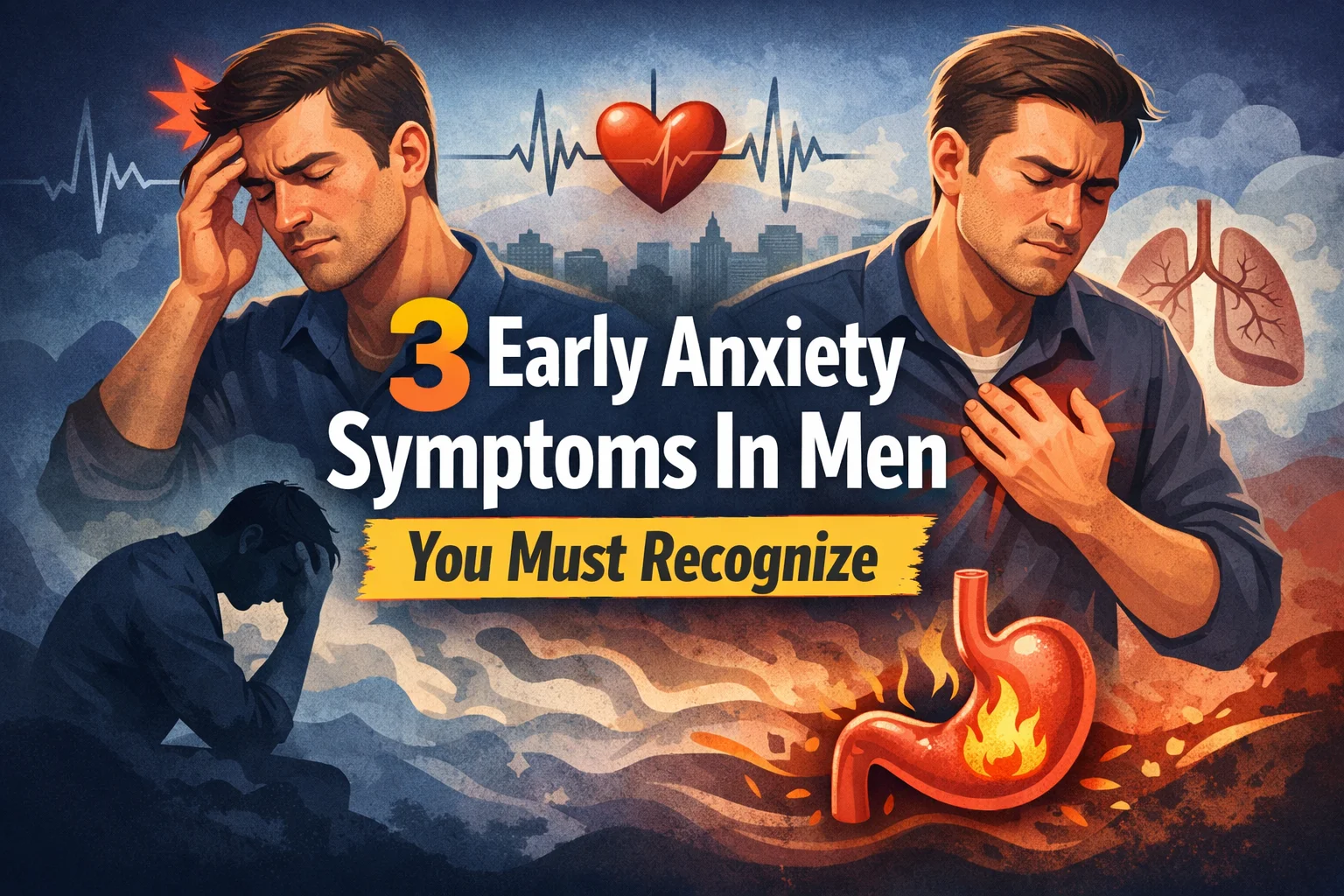



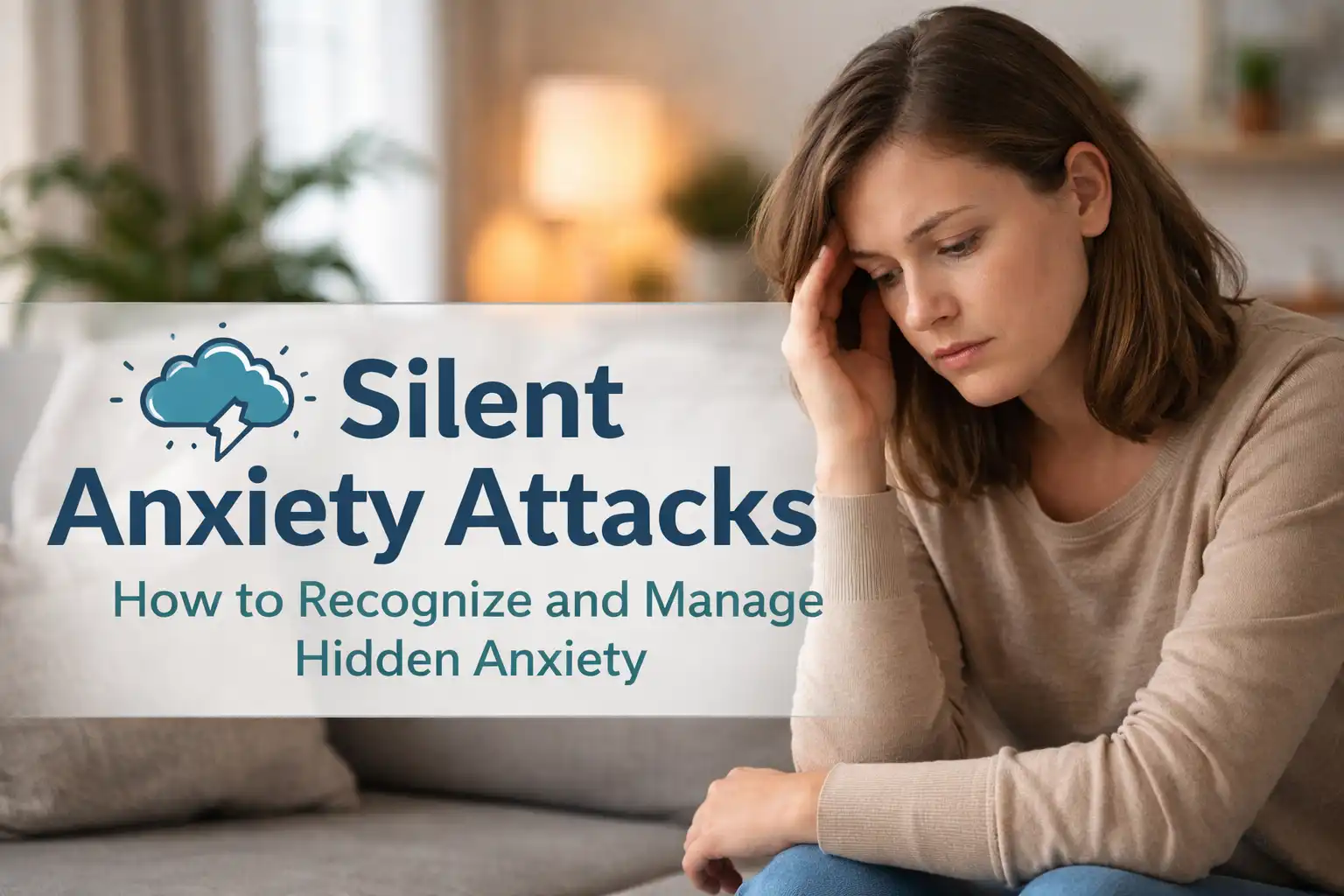

The silent attack of anxiety is a condition that is normally not realised. Although anxiety attacks are usually evidenced by visible emotional symptoms of a situation, such as rapid breathing or shakiness, a silent anxiety attack is one where no signs are manifested. This may complicate the identification of the problem by the individual and people around them to deal with it.
The silent nature of these anxiety attacks can lead to feelings of isolation and confusion, as the person may struggle to communicate their emotional distress. Awareness is crucial in identifying and addressing silent anxiety attacks early on, which can help prevent them from becoming overwhelming. At Calm Minds Hub, we provide the information and resources needed to understand and manage these silent attacks, helping individuals regain control and live a more peaceful, balanced life.
What is a silent anxiety attack?
The silent anxiety attack is a form of anxiety attack where the external symptoms that characterise the condition, like elevated heart rate, sweating and shaking, are not evident. Though the person experiencing it may not be exhibiting any form of inner pain, he or she is struggling with extreme fear, anxiety and panic. Such attacks can last a few minutes or even longer and usually they are subtle, therefore one cannot easily notice them by other people. The awareness of the silent anxiety attacks is of critical significance to both the individual who undergoes them and even the individuals around the affected individual, as this would lead to quick intervention and treatment since they would be aware of the symptoms.
Silent anxiety attack vs panic attack
Although both the silent anxiety attacks and the panic attacks are forms of anxiety, they are different in terms of intensity and the manner in which they are exhibited. The panic attacks are more severe and the physical symptoms such as shaking, sweating and inability to breathe are experienced. Conversely, silent anxiety attacks are those that are not displayed but are rather experienced internally. This complicates their diagnosis, yet no easier to live with. In Calm Minds Hub, we focus on the need to learn these differences so as to be more aware of the required information in the design of effective treatment strategies that can be adopted in each condition.
Common Symptoms of a Silent Anxiety Attack
Anxiety attacks do not have visible physical symptoms. Yet, their emotional and mental impact may be extreme. The general symptoms include:
- Excessive worry and fear
- Inability to concentrate, restlessness.
- Minimal breathing and an augmented heart (internally experienced) rate.
- The sense of imminent doom or panic.
A person can be assisted by discovering such indications early. It allows them to receive the help and care they require. This will prevent the worsening of the symptoms.
Symptoms of silent anxiety attack
Anxiety attacks are mostly silent and influence a person based on their emotional and mental well-being, as opposed to physical well-being. The victims of such attacks tend to experience:
- Extreme fear or dread.
- The psychological phenomenon is known as dissociation or detachment from reality.
- Inability to control emotions.
Such sentiments may not be evident at the surface, and it is extremely distressing to the individuals experiencing them. Subsequently, when these emotional and mental symptoms are overwhelming, it is necessary to seek professional help. The Calm Minds Hub provides useful information. It offers resources, too. These can be used by people in dealing with emotional triggers. This assists in enhancing well-being.
What Causes a Silent Anxiety Attack?
Silent anxiety attacks occur because of several factors. It can be chronic stress, excessive life change or transition, and a family history of anxiety disorders. High-functioning anxiety is a situation where individuals conceal their anxiety through their achievements. These attacks can also be caused by this. Awareness of silent anxiety attacks makes individuals want to locate their triggers. This facilitates the prevention and management of them.
Why Anxiety Attacks Often Go Unnoticed
Anxiety attacks that are never spoken about can be in silent mode since the person might be portraying to be working well with the exterior. This may prove to be quite challenging for people with high-functioning anxiety. They seem calm on the outside. However, they are very distressed within. It is the distance between the appearance of a person and the internal things that make it difficult to make others see the problem and provide assistance. The important thing is that a person may appear okay, but he/she may be in need. They may be experiencing the psychological and emotional consequences of an anxiety attack.
How to Calm a Anxiety Attack Quickly
There is a need to address a silent anxiety attack before it occurs by reducing its impact as it occurs. These techniques, such as mindful breathing and grounding, can be rather beneficial in terms of body and mind restoration. Deep breathing that is slow will assist in stimulating the relaxation response and soothe the nervous system. You may use grounding techniques to help you get back in the present, i.e. touching something or concentrating on the things around you. It can reduce the intensity of the attack. Calm Minds Hub helps individuals use these methods. This provides them with the power to be in control and repress their anxiety symptoms in a short time.
Breathing Techniques for Silent Anxiety Attack Relief
Breathing techniques are one of the most effective ways to alleviate the symptoms of a silent anxiety attack. This slows the heart rate. It also activates the parasympathetic nervous system. This promotes relaxation. Doing these breathing exercises often can help reduce anxiety attacks. They can happen less often and feel less intense.
When to Seek Professional Help
In case the frequent episodes of silent anxiety attacks start to occur, it is necessary to seek professional assistance. Therapists assist individuals in dealing with their symptoms. This applies to those who have been trained in Cognitive Behaviour Therapy (CBT) and Dialectical Behaviour Therapy (DBT). They also educate the long term coping skills. At Calm Minds Hub, we specialise in trauma-informed therapy. We provide counselling whereby we assist individuals in dealing with anxiety. Mental well-being can be enhanced through this assistance.
Can Silent Anxiety Attacks be Prevented?
You may not prevent unspoken anxious attacks. Still, you can use strategies. These could assist in minimising the frequency of occurrence and intensity. Anxiety is assisted by regular exercise. So does good sleep. It is also important to mind and stress. Anxiety is easier to manage using such practices every day. It also minimises the risks of silent attacks.
Final Thoughts
Silent anxiety attacks may not always be visible, but they can be just as impactful as more noticeable anxiety episodes. For many individuals, these attacks occur quietly, often going unnoticed by others, but the toll they take can be profound. The internal struggle can be overwhelming, leaving individuals feeling isolated and unsure of how to cope. At Calm Minds Hub, we understand that dealing with anxiety, whether silent or pronounced, can be incredibly challenging.
Our goal is to provide comprehensive support through awareness, information, and well-being strategies that empower individuals to navigate their anxiety with greater ease. If you’re experiencing silent anxiety attacks, you don’t have to face them alone. Reach out, and let us help guide you toward a calmer, more balanced life. Start your healing journey now and take that first step toward regaining control and peace of mind.
FAQs
Can a silent anxiety attack happen without obvious physical symptoms?
Yes, a silent anxiety attack can happen without clear signs. However, the person might feel a lot of internal stress.
Is a silent anxiety attack dangerous to long-term health?
A silent anxiety attack isn’t usually dangerous. However, if untreated, anxiety can lead to long-term mental health problems. Ignoring it can make things worse.
How can silent anxiety attacks be properly diagnosed?
Silent anxiety attacks can be diagnosed by a mental health professional. They will assess the symptoms and create a treatment plan tailored to the individual’s needs.