



It is normal in society, but to most people, the presence of a large number of people can bring forth great fear and anxiety. Enochlophobia, or fear of crowds, may severely affect a person’s quality of life, leading to social withdrawal and disrupting their career and everyday life. We are fully aware of how crippling this phobia may be at Calm Minds Hub and we strive to offer information and assistance to enable individuals to control their fear and lead a healthier and better life.
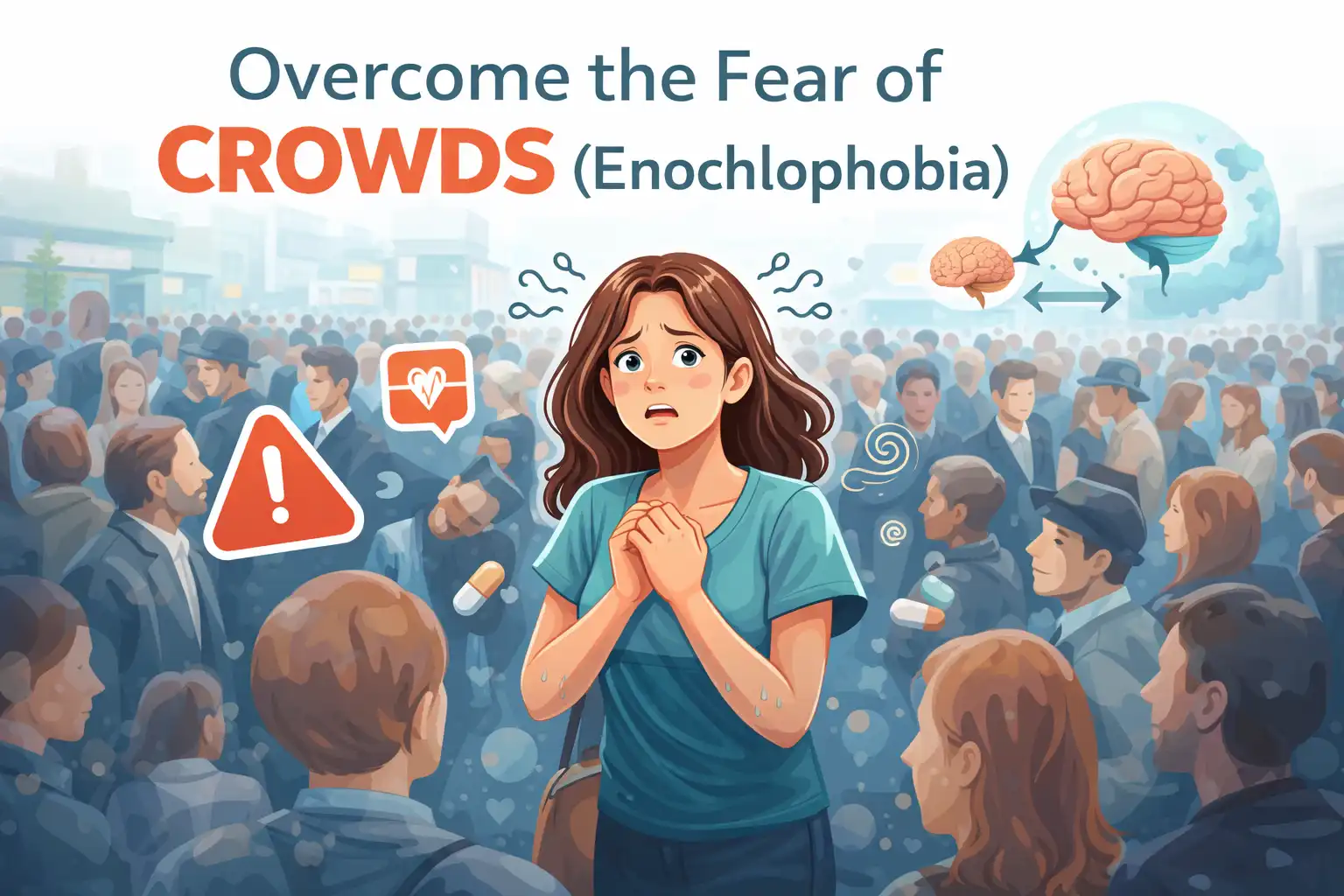
The phobia of Large crowds is not merely an unpleasant experience in the thronging space. It is a fear that is extremely strong and will result in a lot of anxiety and on most occasions, the same will be physically manifested by increased heart rate, perspiration, dizziness and even diarrhoea. It is a fear that is deeply rooted in the fight-or-flight instinct, in which the crowd can be regarded as a potential threat to the brain. Such people tend to avoid crowds; they avoid shopping malls, buses, or even family meetings because they are afraid that they will make the situation worse, hence they develop enochlophobia, or the phobia of crowds.
What is the Clinical Term for Fear of Crowds?
Fear of crowds is also known as enochlophobia. It is a certain phobia that belongs to the larger group of anxiety disorders. Individuals with this condition are subjected to severe pain when faced with huge crowds of people. This fear, at times, may go to the extent of even thinking of being in a crowd. To manage the symptoms of fear of crowds, it is important to understand what it entails as a medical condition in the first place.
Fear of Crowds vs Agoraphobia
Enochlophobia and agoraphobia are not identical, even though they are related to anxiety. Agoraphobia is the fear of not being able to leave a place/situation where one may not easily get out or get assistance, such as open areas or a crowd. Conversely, fear of crowds is a term that is used in reference to a fear of big crowds. The two phobias can overlap, but they are triggered differently. It is essential to know the distinction between the two in order to treat and manage them. We aim at distinguishing these conditions at Calm Minds Hub to offer valuable information and resources for people dealing with anxiety about crowds.
Common Causes of Fear of Crowds
Fear of crowds is caused by different factors that vary from person to person. This phobia can develop due to past traumatic events, such as the feeling of getting lost in the crowd or even having a panic attack in a well-crowded place. Individuals may experience fear of crowds symptoms like dizziness, increased heart rate, and sweating during such events. Genetic factors also play a role; when a person has relatives with anxiety disorders, they may be more prone to develop enochlophobia. This fear can also be provoked or aggravated by environmental factors like childhood experiences or chronic stress.
Psychological Factors Behind Crowd Anxiety
The psychological explanation of the fear of crowds phobia is the manner in which the brain responds to the perceived threat. Fear of the masses to the vast majority is the fear of what is impossible to predict, madness and loss of control. Enochlophobic people become more scared in big crowds and hence are bound to have symptoms like panic, nervousness or feeling faint. Cognitive distortion such as catastrophizing (anticipating the worst), can be used to amplify these fears. Some of the therapy interventions suggested by Calm Minds Hub include Cognitive Behavioural Therapy (CBT), so as to conquer such thought patterns and adopt healthier coping mechanisms.
Fear of Crowds and Panic Attacks
A high population will cause panic attack to enochlophobic persons. These attacks can be abrupt outbursts of extreme fear along with the physical signs, like heart beating, breathing issues, and nervousness. The connection between panic attacks and anxiety should be known to overcome the fear of crowds.
Triggers That Worsen Fear of Crowds
Some triggers can worsen the phobia of crowds and make the task of its management complicated. Triggers can be loud noises. They can be chaotic places. They may be definite places, e.g., transport areas or at events. The idea of attending a crowded place can also make one anxious. Calm Minds Hub suggests single trigger identification. You can slowly eliminate reactions with the assistance of a therapist. They are able to use exposure therapy and the rest.
This helps individuals to have their confidence and control over their fears. What is the fear of crowds? Specifically, it is a phobia that causes it to be highly anxious whenever he is exposed to people in large numbers. One may feel dizzy because of the fear of crowds. You can get a palpitating heart or sweating. People with stomach problems like diarrhoea are also present.
How Fear of Crowds Affects Daily Activities
A fear of crowds can be a very strong factor in daily living. Even the simplest things, such as grocery shopping, social outing or travelling, could be enormous sources of stress. This can lead to avoidance behaviours. People can also go out of their way not to go to a location that has lots of people. This limits their engagement to normal activities. This shunning can lead to isolation and low self-esteem in the long run. What is fear of crowds? It is an extreme irrational panic in the case of crowds. Symptoms such as increased heart rate, sweating, light-headedness, and even diarrhoea can be the expression of the fear of crowds. This can make it hard to work in social environments.
Impact on Work, Travel, and Social Life
The impact of enochlophobia does not merely stop in the daily activities but also at work, traveling and social life. Persons having a phobia towards crowds could shun business meetings, travelling, or social life. This could lead to missed opportunities and a bad relationship. This can hurt career advancement, self-growth and health. Calm Minds Hub is catering to the enochlophobic group. We offer coping skills to handle overcrowded places. As a result, it leads to a chance of a good social and professional life.
Professional Treatment Options
Crowd phobia is a disorder that can be handled quite successfully by a professional. Therapy is the ultimate treatment approach. Cognitive Behavioural Therapy (CBT) is most appropriate for dealing with irrational fears. Slowly, exposure therapy presents people with crowds in a secure environment. It is a common method of aiding anxiety. A doctor may prescribe medication in case there is a need for further assistance. Antidepressants or beta-blockers can be used to relieve anxiety symptoms.
Can Medication Help With Fear of Crowds?
Sufficiently, Enophobia is treatable with medication. It can be applied especially where the anxiety is too much. However, medications usually work better when they are combined with intervention, such as CBT or exposure therapy. Calm Minds Hub cooperates with medical practitioners. This way, citizens are accorded the best services and treatment of their needs.
Final Thoughts
The fear of crowds is called enochlophobia and can concern any region of life. It affects the relationship with other people and can decrease career opportunities. However, with adequate treatment and counselling, individuals will be in a position to discard their fear and assume the management of their lives. Calm Minds Hub offers people information and resources that can help them understand and overcome their fear of crowds. We aim at providing support and awareness, making people take action to overcome their fear. Although we do not offer immediate treatment services, we refer you to seek professional therapy, medication, or a mixture of the two and treat effectively.
FAQs
How do you get over the fear of crowds?
To overcome the fear of crowds, you can use therapy. This includes Cognitive Behavioural Therapy (CBT) and exposure therapy. Relaxation techniques and support groups can also help.
Why do some people hate crowds?
Crowd anxiety is often linked to irrational fears of being trapped or losing control in a large group of people. Personal experiences, genetics, or environmental factors can contribute to this fear.
Why do crowded places make me anxious?
Crowded places can trigger the body’s fight-or-flight response. This reaction causes anxiety, panic attacks, and physical symptoms like diarrhea. Therapy and anxiety management techniques can help alleviate these responses.