



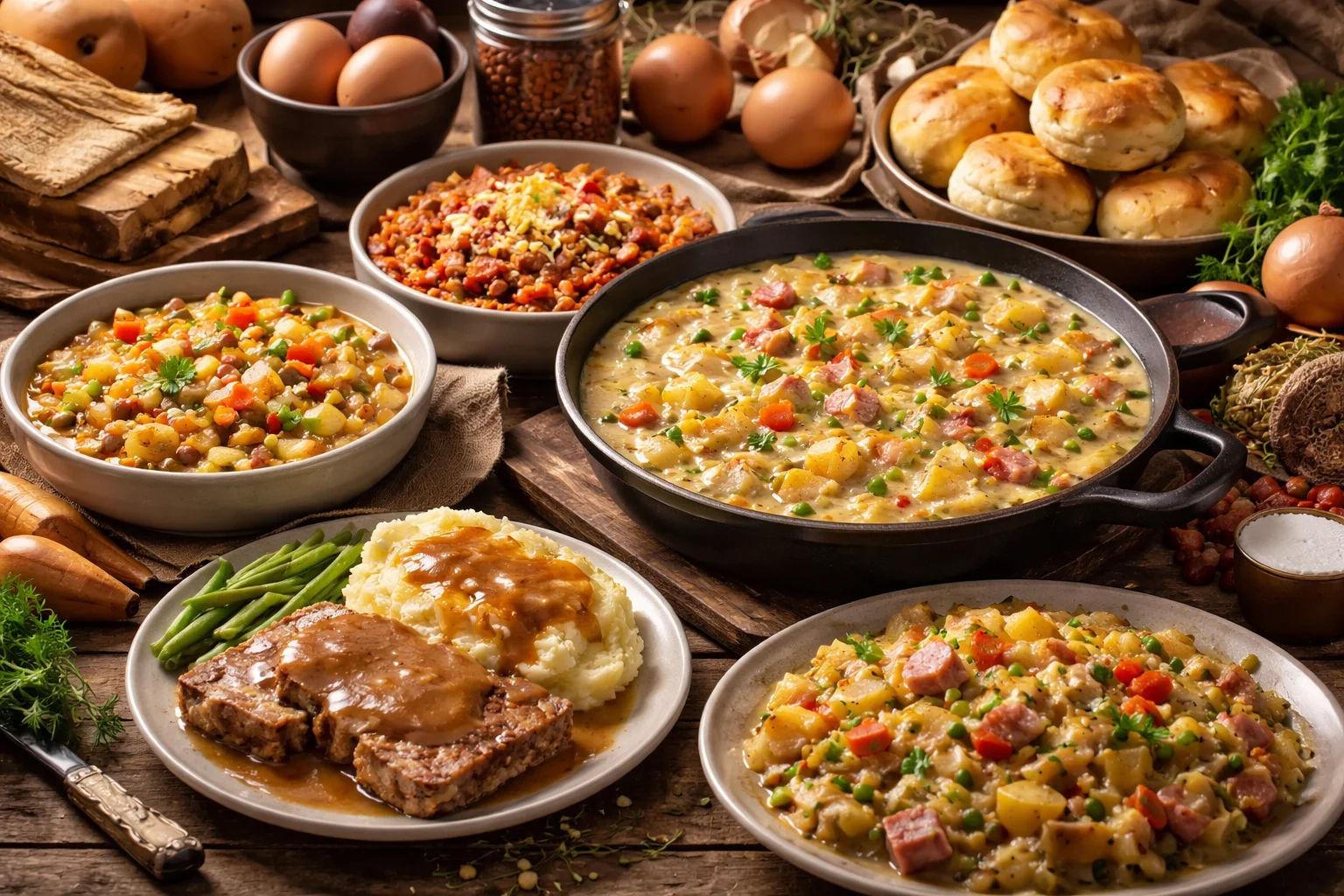

The great depression meals were developed during the great depression. This was brought about by the crash of 1929 in the stock market, the failure of the banks and high unemployment. The Great Depression resonated. Families had to earn their livelihood. The great depression was characterized by the use of pantry food. Basics turned into important foods.
These meals matter now because they embody resilience. Grocery prices are rising today. Great Depression meals can help us be smart with food. You can enjoy good flavor without overspending. Calm Minds Hub highlights their role in fostering mindful eating habits that build calm amid financial stress.
Great Depression Meals That Still Save Money Today
Modern budgets mirror the constraints of the 1930s. Great Depression recipes include bean soup and potato patties. They use low-cost ingredients. Plus, they make big servings. A classic example is vinegar pie. It’s made with vinegar, flour, and sugar. No fancy fruits are needed.
Families today recreate these to cut costs by 30-50%. Calm Minds Hub suggests the “poor man’s meal.” It’s an easy dish. Just mix potatoes, onions, and hot dogs. Cook them together. These dishes prove that great depression meals deliver savings without skimping on satisfaction.
These meals are more than just staples. They change with seasonal sales. For example, use extra cabbage in fritters. Calm Minds Hub tracks how shoppers save hundreds each year. They swap costly proteins for lentil loaves or corn dodgers.
Cheap Ingredients Used in Depression-Era Cooking
Cookers of the depression days perfected simple heroes; beans, rice, potatoes, and eggs. Food in great depression was focused on food that was shelf-stable, such as flour, corn meal, and lard. Onions and cabbage were used to make the soups, and milk powder was used to restore the creamy texture.
Canned goods and root vegetables were popular. The Great Depression caused many farms to have extra crops. This made prices very low. Calm Minds Hub notes these ingredients remain budget-friendly, often under $1 per pound. Stocking them builds a resilient pantry echoing the era’s thrift.
Easy Recipes Inspired by Great Depression Cooking
Recreating great depression recipes is straightforward. Try Depression-era cornbread: mix cornmeal, flour, baking powder, salt, milk, and an egg, bake for 20 minutes. Another hit: Hoover stew, blending macaroni, hot dogs, tomatoes, and corn kernels. Potato soup simmers peeled potatoes with onions in water, thickened with a flour roux. These great depression meals require no fancy tools. Calm Minds Hub shares that scaling them for families keeps weekly food spending low.
Smart Cooking Techniques That Reduce Food Costs
- Depression cooks stretched meals using savvy methods like boiling bones for flavorful broth from scraps.
- “Extender” tricks, such as adding breadcrumbs to meatloaf, bulk up proteins affordably.
- One-pot wonders minimized fuel use by cooking everything together.
- Pickling preserves extras, extending their shelf life without refrigeration.
- Calm Minds Hub emphasizes “nose-to-tail” use of every bit of food counts to slash waste.
- These techniques make great depression meals efficient for busy households.
How Great Depression Meals Help in Modern Budgeting
Today’s inflation echoes the effects of the Great Depression. Great depression meals fit seamlessly into meal prepping, reducing takeout temptations. They promote bulk buying of staples, cutting per-meal costs to pennies. Track spending with apps, then swap in these dishes. Calm Minds Hub advises pairing them with gardening for fresher, cheaper produce. This approach stabilizes budgets while nurturing mental calm through predictable routines.
Common Mistakes When Cooking on a Budget
- Newcomers to great depression recipes often over-season, masking simple, natural flavors.
- Ignoring portion control leads to waste, countering the era’s thrift ethos.
- Skipping planning results in costly impulse buys.
- Discarding “ugly” veggies, Calm Minds Hub warns they’re ideal for stews.
- Failing to balance nutrition by not rotating proteins, causing monotony.
How to Build a Weekly Meal Plan with Great Depression Meals
- Start by inventorying staples like beans and rice.
- Map seven days: Monday’s bean soup, Tuesday’s potato patties.
- Wednesday: cornbread with greens; Thursday: Hoover stew.
- Shop once weekly, focusing on sales.
- Calm Minds Hub suggests downloadable templates from their resources.
- Adjust for variety, aiming for $50 to feed four.
- Friday: vinegar pie dessert after macaroni hot dish.
- Weekend: transform leftovers into fried rice patties or veggie hash to minimize waste.
- Track progress with a simple journal to refine portions.
- Calm Minds Hub stresses nutritional balance, pair carbs with canned fish or eggs twice weekly.
- Involve family in prep to build habits and sustain energy without boredom.
Final Thoughts
Embracing Great Depression meals brings back comforting cooking. This lasts beyond tough times. These dishes show that simple food can be full of flavor. Calm Minds Hub supports them as smart ways to stay healthy and save money. They turn pantry basics into daily wins. Great Depression meals can clear your mind. They reduce stress about meals. You can change recipes to fit your taste. Be thrifty while you do it. Share your ideas in the Calm Minds Hub comments. Let’s inspire each other! Integrate great depression meals today for lasting calm and financial freedom. Start small, savor the savings, and build a legacy of mindful eating.
FAQs
Why are great depression meals becoming popular again?
Economic pressures and sustainability trends revive them, offering affordable, waste-free options amid inflation.
Are great depression meals healthy?
Yes! When you add veggies and proteins, they focus on whole foods. They avoid processed items.
Are great depression meals suitable for modern diets?
Absolutely, they adapt easily to vegan, gluten-free, or low-carb tweaks while staying budget-friendly.