


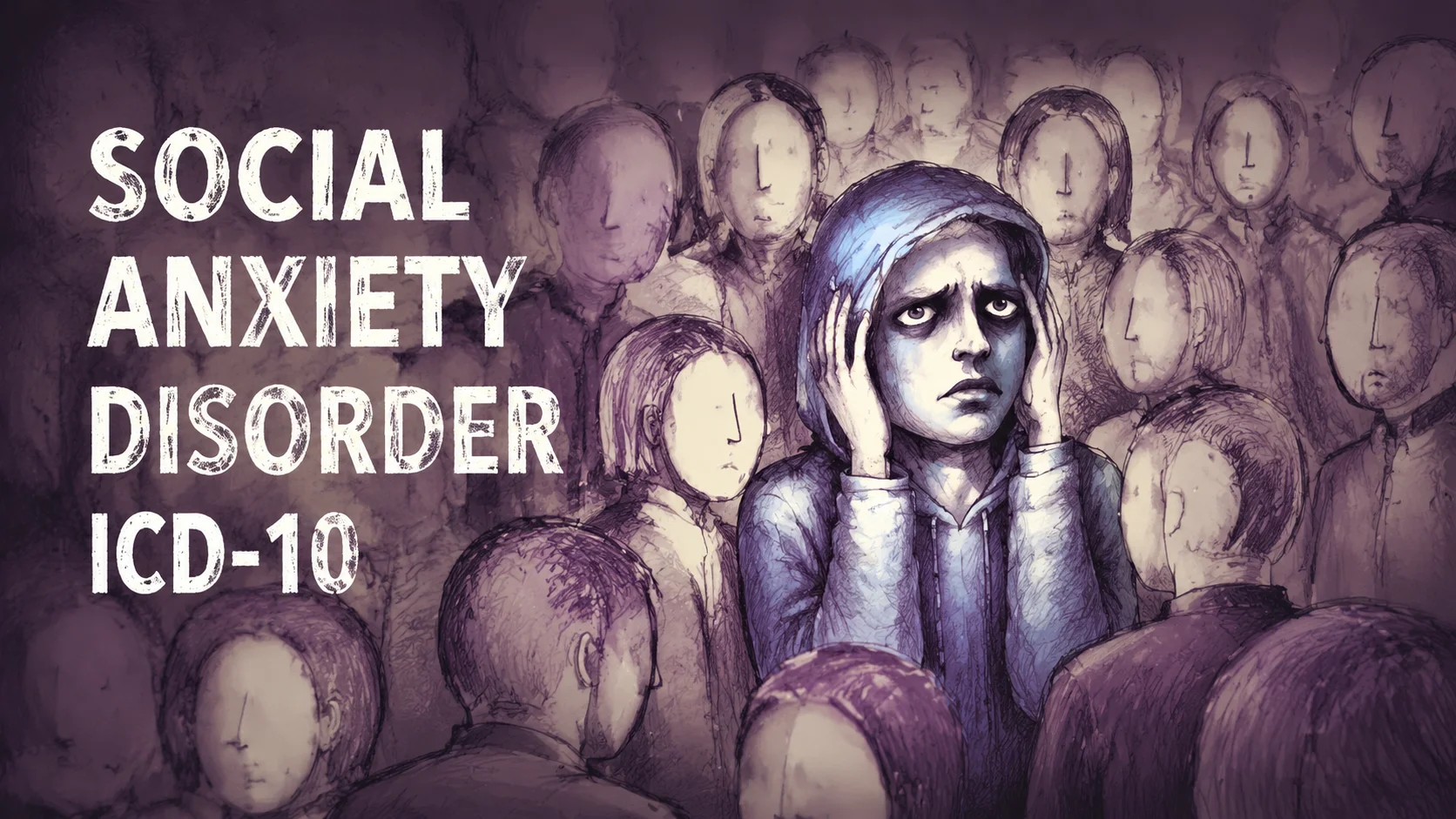

Social anxiety disorder ICD-10 is a mental health disorder which can significantly affect professional and social functioning. It can be extremely difficult in the workplace, and is characterized by extreme anxiety when meeting new people, speaking in front of others or performing in public.
It is important to have insights into the intricacies of SAD in the workplace setting. Employees might sweat, tremble, or have intrusive thoughts in daily team meetings, presentations, and other situations. Access to resources, coping strategies, and professional guidance, such as from Calm Minds Hub, can help workers deal with these issues.
Understanding Social Anxiety Disorder ICD-10
Social Anxiety Disorder ICD-10 falls under the classification of F40.1 – Persistent fear of social or performance situations. This designation is comparable to that in DSM-5 and aids in distinguishing the SAD from other anxiety disorders, like generalized anxiety disorder, panic disorder and agoraphobia.
ICD-10 social anxiety disorder
ICD-10 social anxiety disorder provides a good framework for identifying patients with social anxiety disorder whose anxiety is severe enough to interfere with functioning in the workplace or social situations. It targets avoidance behaviours and fear of being judged in professional or public environments for targeted interventions.
Key Insights of ICD-10 Code Social Anxiety Disorder
- ICD-10 code for social anxiety disorder outlines the important diagnostic features.
- Some of the major indicators are fear of embarrassment, extreme self-consciousness and avoidance of social interaction.
- If these signs are caught early, long-term occupational and interpersonal problems can be avoided.
- The code is used by clinicians to distinguish SAD from other disorders that may occur at the same time, e.g., depression, OCD, avoidant personality disorder.
- Accurate identification enhances personalized therapy plans.
- Cognitive behavioral therapy, exposure therapy, and pharmacotherapy are all potential therapy plans.
How Clinicians Use ICD-10 Code Social Anxiety Disorder?
Healthcare professionals rely on ICD-10 codes to guide clinical assessment, diagnose accurately, and communicate effectively with insurers. This process ensures proper billing and facilitates access to therapies like SSRIs, sertraline, or paroxetine when pharmacological intervention is necessary.
By integrating these codes into electronic health records, clinicians can monitor treatment outcomes, adjust therapy strategies, and collaborate with multidisciplinary teams. This approach enhances workplace support systems, reducing absenteeism and improving overall employee well-being.
ICD-10 code social anxiety disorder
ICD-10 code social anxiety disorder ensures consistent reporting and documentation, which is crucial for compliance, insurance claims, and continuity of care. It also provides a foundation for research and epidemiological studies in occupational mental health.
Importance of Accurate ICD-10 Coding in Workplace
Accurate ICD-10 coding supports early recognition of social anxiety symptoms in professional environments. This precision helps employers, HR managers, and mental health professionals implement interventions that minimize workplace disruptions.
Standardized coding ensures consistency across occupational health assessments, making it easier to plan reasonable accommodations, track therapy progress, and maintain a supportive work culture. It also provides data for mental health awareness initiatives within organizations.
Challenges of Social Anxiety Disorder at Workplace
Employees with SAD may face difficulties in communication, networking, or leading projects. Fear of judgment and public scrutiny can reduce participation in meetings, hinder presentations, and limit career growth opportunities.
Stressful work environments exacerbate anxiety symptoms, increasing absenteeism and reducing overall productivity. Understanding these challenges allows employers to adopt empathetic policies and foster a psychologically safe workplace.
Managing Social Anxiety Disorder in the Workplace
Workplace strategies for managing SAD include identifying triggers, developing coping strategies, and creating an inclusive workplace. Providing information and resources like counselling or virtual therapy sessions can help, as well as promoting open communication.
Employers can collaborate with clinical psychologists and psychiatrists to design wellness programs focused on stress management, social skills training, and mindfulness practices, helping employees regain confidence and efficiency.
Coping Strategies and Therapy Options
Cognitive behavioral therapy, exposure therapy, relaxation strategies, and pharmacotherapy are all coping strategies and therapy options. Psychoeducation, support groups, and structured exposure hierarchies can be used to help employees slowly work through anxiety-provoking situations.
Workplace Accommodations for Social Anxiety
Social anxiety can be accommodated in the workplace through flexible schedules, remote work arrangements, mentoring and alternative presentation styles. These measures assist employees in performing effectively and reduce stress and increase job satisfaction.
Effective Treatments for Social Anxiety Disorder ICD-10
The best Social Anxiety Disorder treatment is a combination of psychotherapy, behavioral intervention, and medication. CBT is still the gold standard, with a focus on changing negative thinking patterns and encouraging healthy coping strategies.
When therapy is not enough, medications like the SSRIs (sertraline and paroxetine) may be prescribed. Formal treatments are complemented by mindfulness, lifestyle changes and stress management techniques to enhance quality of life.
Preventive Measures and Awareness at Workplace
Stigma is lessened and early intervention is promoted by preventive measures and awareness programs. Workshops on mental health, peer support systems and communications are covered, and employees are taught to seek assistance without fear of judgment.
Teaching of social anxiety triggers, comorbidity and coping mechanisms is done regularly, thus helping to build organizational resilience. A culture of mental health can help workplaces help their employees proactively deal with anxiety.
Conclusion
The ICD-10 Social Anxiety Disorder has a significant impact on workplace performance and relationship. Employers can effectively support affected employees with an understanding of ICD-10 coding, an awareness of the challenges and evidence-based interventions.
Calm Minds Hub believes that mental health and productivity go hand in hand and should be addressed through early detection, treatment and workplace accommodations. A focus on mental health promotes a more inclusive workplace and can lead to better performance.
FAQs
What is the ICD-10 code for social anxiety disorder?
The ICD-10 code for social anxiety disorder is F40.1, covering persistent fear of social and performance situations.
Can social anxiety disorder affect workplace performance?
Yes, SAD can limit participation in meetings, presentations, and teamwork, reducing overall efficiency and professional growth.
What are common treatments for social anxiety disorder ICD-10?
Treatments include cognitive behavioral therapy, exposure therapy, SSRIs like sertraline or paroxetine, mindfulness, and workplace accommodations.