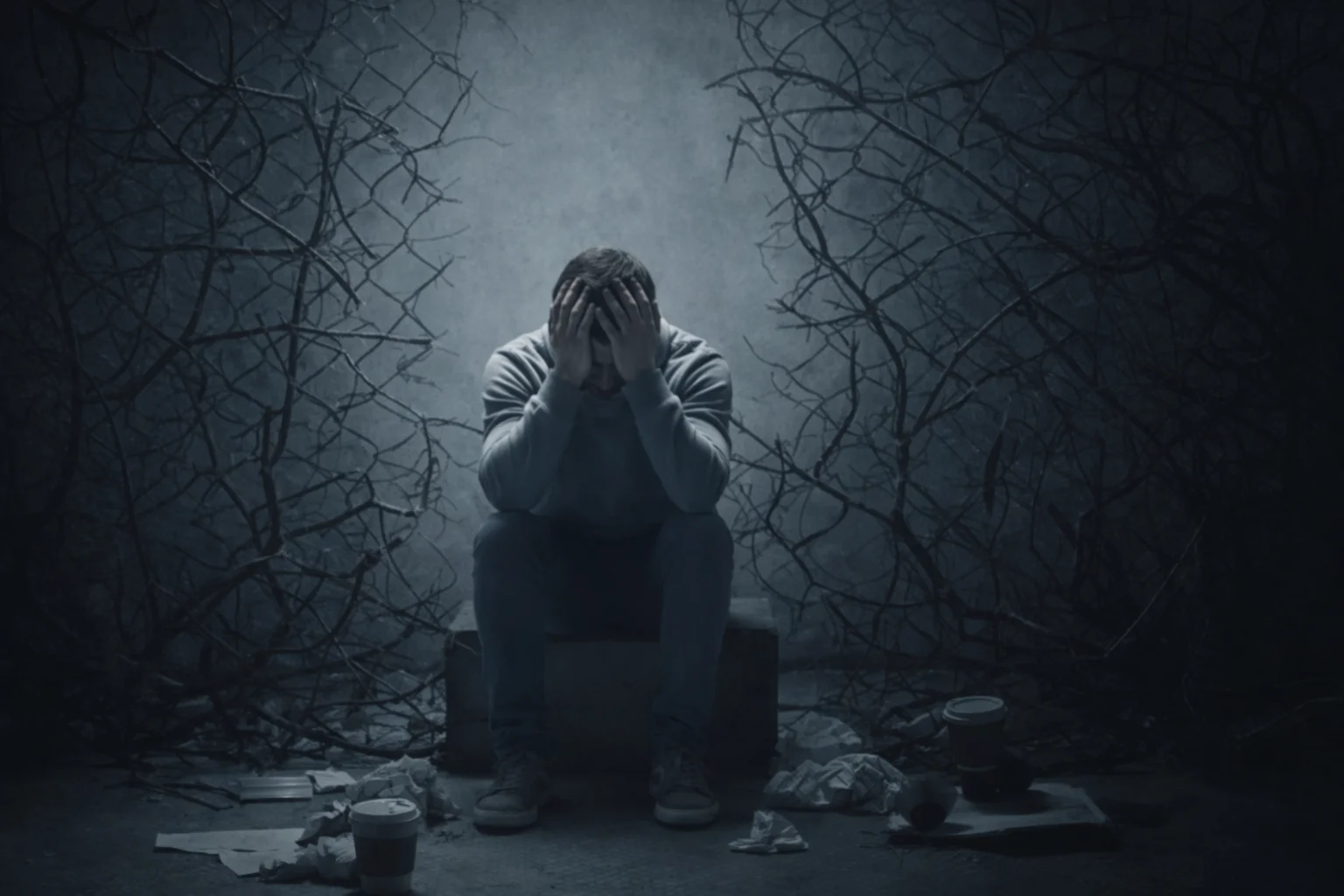




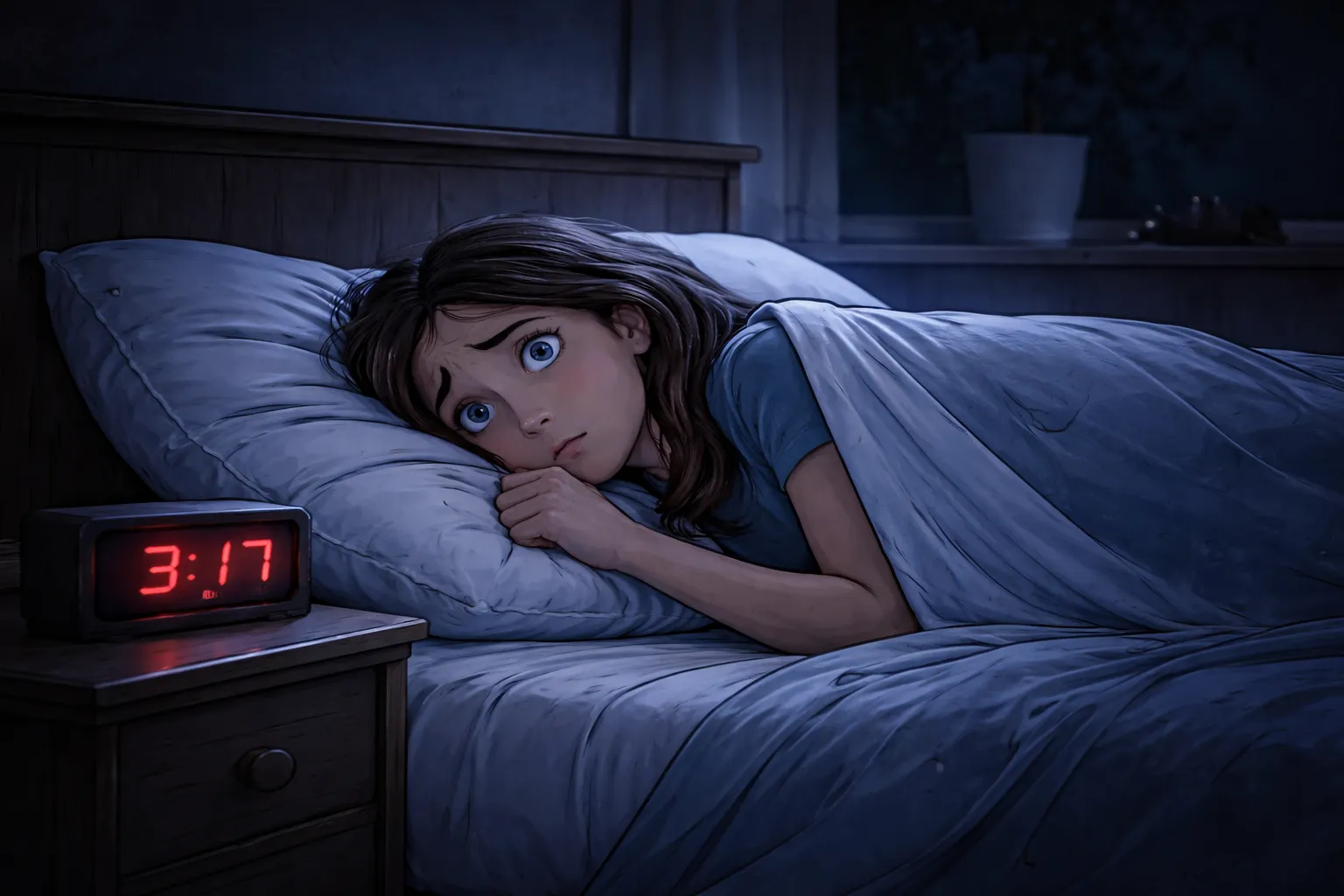

Sleep anxiety is the constant fear or worry about bedtime. It can make falling asleep or staying asleep hard. This anxiety often happens with other issues, like anxiety disorders, depression, or insomnia. Sleep disruption can form a harmful cycle. Anxiety leads to sleep problems. Then, not getting enough sleep makes mental health worse. It also affects daily functioning. At Calm Minds Hub, we focus on practical ways to manage sleep anxiety. Our strategies are based on research. We combine mental health treatments with lifestyle changes and education.
Key steps are:
- Recognise sleep anxiety triggers.
- Check how well therapies work, especially CBT‑I.
- Create a long-term plan for better sleep.
What Is Sleep Anxiety and How Does It Affect Your Health?
Sleep anxiety is the worry or fear tied to nighttime, going to bed, or the thought of not sleeping. It can happen with or without a mental health disorder. For some people, it becomes so intense that it overlaps with somniphobia, a more extreme fear of sleep itself or of what might happen during sleep.
This type of sleep disruption often shows up in several ways. You might have trouble falling asleep. You could wake up often at night. You might wake up too early. Or, you may lie in bed wide awake, even when you feel tired. Chronic sleep anxiety and insomnia can cause health problems over time. They weaken the immune system and put strain on the heart. They also lead to changes in metabolism. These issues can make mental health conditions worse, like depression and generalised anxiety disorder.
Common Symptoms of Sleep Anxiety: Panic Attacks and Nocturnal Disturbances
For some, sleep anxiety can trigger panic attacks at night. These nocturnal panic attacks wake them with sudden fear and strong physical symptoms. A nocturnal panic attack can make you breathe quickly. Your heart may race, and you might feel tightness in your chest. You could shake or sweat. Hot or cold flashes may occur. You might also feel a strong fear that something bad is happening, even when there’s no real danger. Signs of a panic attack while sleeping or about to fall asleep often include:
- Waking from sleep with overwhelming fear, sometimes without a clear dream or nightmare.
- Feeling like you cannot breathe properly or are choking, with heightened awareness of heart rate and chest sensations.
- Intense worry about going back to sleep or even getting into bed, leading to ongoing sleep disturbances.
These sleep problems aren’t just occasional restlessness. They happen often. They make you fear sleep. They also keep you alert at bedtime. Over time, this pattern can train your brain to link bed and nighttime with panic. This can worsen sleep anxiety and insomnia. However, specific anxiety management and therapy can help.
The Connection Between Anxiety, Chest Pain, and Dizziness at Night
Nighttime anxiety can feel very physical. Many people worry about chest pain from anxiety or ask, “Can anxiety cause dizziness?”. when these sensations occur in bed. Intense anxiety causes stress hormones to spike. It also changes your breathing. These effects can lead to chest pain, tightness, light-headedness, and dizziness. This is especially true if you start to hyperventilate.
Common physical anxiety effects at night include:
- Rapid or shallow breathing, which can lower carbon dioxide levels and lead to dizziness or tingling sensations.
- Fast heart rate and chest discomfort that may mimic more serious heart problems.
- Trembling, sweating, and a feeling of nervousness that make it hard to return to sleep.
Anxiety, chest pain, and dizziness often come from panic or stress. But don’t self-diagnose. If you have new, severe, or unclear chest pain, get medical help right away. It’s important to check for heart issues or other health problems. Calm Minds Hub shows how to tell medical emergencies from anxiety symptoms. They work with healthcare pros. They offer therapy, sleep anxiety tips, and stress relief. This helps with nighttime problems.
Effective Treatments for Sleep Anxiety Tips from Calm Minds Hub
The best treatments for sleep anxiety often use therapy and behaviour changes. They may also include sleep anxiety medication. Other anxiety meds can be used too. These should be prescribed and watched closely. Cognitive Behavioral Therapy for Insomnia (CBT‑I) is widely recommended as a first‑line insomnia treatment and has strong evidence for improving sleep quality, sleep anxiety, and overall anxiety relief.
Sleep anxiety meds and sleep aids, like short-term sedatives, can help with severe symptoms. Use them with behavioural therapy if you can. CBT-I research shows it works like sleep medicines. It often improves sleep for longer without causing dependency. That’s why Calm Minds Hub focuses on therapy support and lifestyle changes for sleep anxiety.
Diagnosing Sleep Anxiety and Panic in Sleep
To diagnose sleep anxiety and panic attacks during sleep, start with a detailed medical history. A physical exam is also important. Focus on when symptoms happen and how often they occur. Check for any red-flag signs of other sleep disorders or medical issues. Your clinician may ask about your sleep schedule, bedtime habits, mental health history, substance use, and any family history of sleep disorders or anxiety disorders.
Nocturnal panic attack symptoms can be confusing. They might look like other issues, such as sleep apnea, NREM parasomnias, seizures, or REM behaviour disorder. A sleep study can provide clear information. Polysomnography typically records:
- Brain electrical activity (EEG), eye movements, and sleep stages to see how your sleep is structured.
- Heart rate, blood oxygen, breathing patterns, and snoring can show sleep problems. These problems are linked to breathing.
- Body position and limb movements can show signs of parasomnias. They may also indicate periodic limb movement disorders.
This sleep study helps rule out issues that look like panic during sleep. It makes sure your treatment plan targets the right problem. This could be sleep anxiety alone, a mix of anxiety and another sleep disorder, or something else entirely. Calm Minds Hub suggests teaming up with a primary care provider, sleep specialist, or psychiatrist. They help with tests. They explain results. They also coordinate therapy and medication options.
Lifestyle Changes and Techniques to Reduce Sleep Anxiety
Lifestyle changes are powerful tools for reducing sleep anxiety and improving sleep quality, especially when combined with therapy. Good sleep hygiene means shaping your sleep habits and environment so they support, rather than fight against, your body’s natural sleep drive and circadian rhythm. Evidence based healthy sleep practices and bedtime habits include:
- Keeping a regular sleep routine: wake up at the same time every day, even on weekends, to stabilize your internal clock.
- Avoid caffeine and nicotine in the late afternoon and evening. Also, steer clear of alcohol close to bedtime. These can disrupt sleep stages and increase sleep anxiety.
- Make your sleep space cool, dark, and quiet. Also, use your bed only for sleep. This helps your mind connect your bed with rest.
Relaxation techniques are easy. You can try meditation or gentle stretching. Breathing exercises and calming music help, too. These methods lower stress. They also calm your nervous system before bed. Regular physical activity helps improve sleep habits over time. However, intense workouts should end a few hours before bedtime. This way, they won’t disrupt your ability to wind down.
Calm Minds Hub often suggests using stress management skills with good sleep habits. Try journaling. Skip late-night news and social media. Set “worry time” for earlier in the day. This helps your mind and body know that night is for rest, not overthinking.
Final Thoughts
Sleep anxiety can feel overwhelming, but it is highly treatable when you address both the mind and the body using a step‑by‑step plan. Using therapies like CBT-I, proper medical care, and good sleep habits can help many people. They reduce sleep anxiety. They also lessen night-time panic. As a result, people see better sleep and less anxiety.
Calm Minds Hub aims to make this process clearer, safer, and easier. It’s especially true if you’re unsure where to begin or feel like you’ve “tried everything.” Seeking help from mental health professionals and medical experts isn’t a weakness. It’s a positive step towards better sleep, improved mental health, and a better quality of life.
FAQs
What is sleep anxiety?
Sleep anxiety is a constant worry or fear about bedtime. It can involve falling asleep, staying asleep, or the effects of not getting enough rest. This often happens with insomnia or other anxiety issues.
Is sleep anxiety a sleep disorder or an anxiety disorder?
Sleep anxiety links sleep disorders and anxiety. It can happen with generalized anxiety or panic disorder. Some people fear sleep, known as somniphobia. Common issues are chronic insomnia and trouble sleeping.
How is sleep anxiety treated?
Effective treatment uses CBT-I or other therapies. It also involves sleep hygiene and stress management. If needed, doctors can prescribe sleep anxiety meds. Always get medical supervision.