


Your path to better health starts here. Book your consultation today.

Your path to better health starts here.

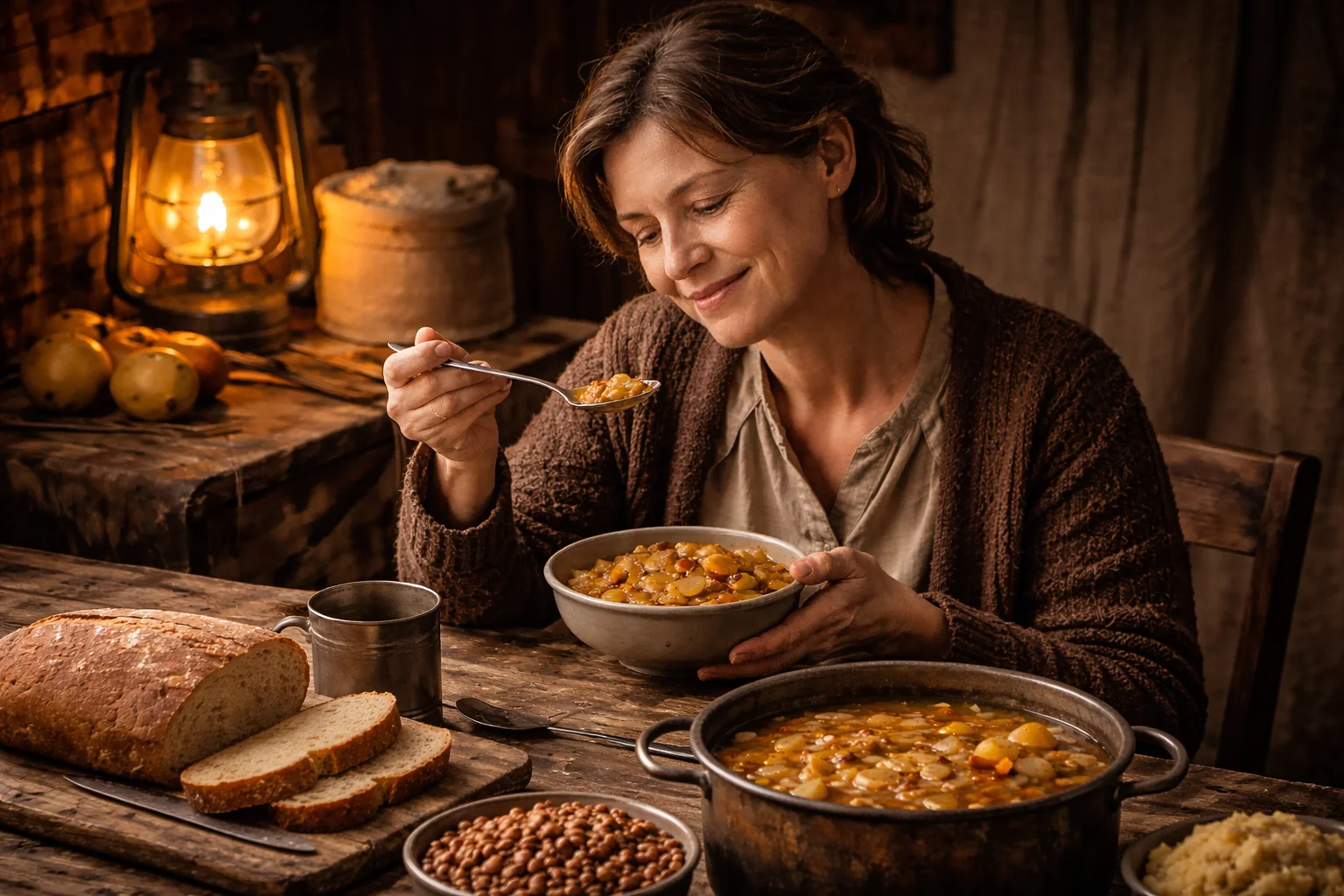
Middle-aged woman enjoying Great Depression food, a bowl of vegetable stew, in a vintage kitchen with rustic bread and beans

Dozen of articles. Improve your lifestyle now!

What Is Great Depression Food? History, Recipes, and Lessons in Resilience

During the unpredictable periods, individuals go back to the fundamentals, which include plain food, common dining, and functional cooking. Families in the USA were left with no option during the Great Depression of the 1930s. Workplaces were lost, savings were lost, and food budgets were lost overnight. But out of that struggle emerged a culinary tradition based on hardiness, imagination, and silent perseverance. Food in the Great Depression is not just about cheap recipes. It portrays the resilience of families who had to live with what they had and managed to feed both the body and the soul. At Calm Minds Hub, we celebrate the strength and ingenuity that food represents in tough times, offering comfort and hope to those navigating challenging situations.

The Historical Background

The great depression started in 1929, following the crash of the stock market, and lasted until the 1930s. Americans had millions of people jobless. When there was food, some simply could not afford it.

In the absence of massive aid programs, families had to work on their home gardens, canning, stretching, and preserving food, and sharing the meals with neighbors. Nothing was wasted. Cold stuff was reused, bones turned into meat, and old bread took on a new use. Dining was grounded on what was available rather than what one desired. And surprisingly, most of those basic recipes are still viable and feed today.

What Is Great Depression Food?

Great Depression food refers to low-cost meals made from basic, accessible ingredients. Expensive cuts of meat and specialty products were rare. Instead, families relied on:

  • Beans
  • Potatoes
  • Bread
  • Rice
  • Seasonal vegetables
  • Small amounts of meat for flavor

Many meals were naturally meatless. Desserts were often made without eggs, milk, or butter when those ingredients were scarce. Though created out of necessity, these dishes brought comfort during emotionally exhausting times.

Classic Great Depression Recipes

1. Potato Soup
A simple mix of potatoes, onion, water or broth, and seasoning. Sometimes a little milk or butter was added if available. It was filling, inexpensive, and warming.

2. Hoover Stew
Named after President Herbert Hoover, this dish combined macaroni, canned tomatoes, beans, and sliced hot dogs or sausage. Everything cooked in one pot, making it affordable for large families.

3. Depression Cake (Wacky Cake)
Made without eggs, milk, or butter, this chocolate cake used flour, sugar, cocoa powder, oil, vinegar, baking soda, and water. It showed that even in hardship, small joys mattered.

4. Cornbread and Beans
Beans provided protein and fiber, while cornbread added inexpensive energy. Together, they created a simple but balanced meal.

Emotional Lessons from Depression-Era Cooking

These meals may seem basic, but the mindset behind them offers meaningful lessons.

Simplicity reduces overwhelm.
Simple routines, like cooking a basic meal, create structure and calm in stressful times.

Resourcefulness builds confidence.
Preparing nourishing food from limited ingredients reinforces self-reliance and capability.

Community eases isolation.
Sharing meals reminds us we are not alone. Connection has always been a powerful source of emotional strength.

Final Thoughts

Food and the Great Depression is not all about poverty. It is about perseverance. It narrates of uncertain families, but they kept sitting around the dinner table. Food was a stabilizer in a turbulent world, warmth in harsh conditions, and hope in a bleak world. Big change is not necessarily the way to go. It is often planted in the usual ways, a pot of soup left simmering on the stove or a loaf of bread at the table. History tells us that misery does not destroy honour. Strength can be gained even from the most basic kitchens using the most ordinary ingredients. At Calm Minds Hub, we understand how food and family can be a source of comfort and resilience during difficult times.

FAQs

What foods were most common during the Great Depression?


Beans, potatoes, bread, rice, canned vegetables, and small portions of inexpensive meat were staples. Many families relied heavily on homegrown produce.

Why is Great Depression food relevant today?


It teaches budgeting, resourcefulness, gratitude, and resilience skills that are especially helpful during financial or emotional stress.

3. Were Great Depression meals healthy?


While limited in variety, many meals were surprisingly nutritious. They relied on whole foods like beans, vegetables, and homemade bread rather than processed items.


Leave a Reply

Your email address will not be published. Required fields are marked *

Related Articles

During the unpredictable periods, individuals go back to the fundamentals, which include plain food, common dining, and functional cooking. Families in the USA were left with no option during the Great Depression of the 1930s. Workplaces were lost, savings were lost, and food budgets were lost overnight. But out of that struggle emerged a culinary tradition based on hardiness, imagination, and silent perseverance. Food in the Great Depression is not just about cheap recipes. It portrays the resilience of families who had to live with what they had and managed to feed both the body and the soul. At Calm Minds Hub, we celebrate the strength and ingenuity that food represents in tough times, offering comfort and hope to those navigating challenging situations.

The Historical Background

The great depression started in 1929, following the crash of the stock market, and lasted until the 1930s. Americans had millions of people jobless. When there was food, some simply could not afford it.

In the absence of massive aid programs, families had to work on their home gardens, canning, stretching, and preserving food, and sharing the meals with neighbors. Nothing was wasted. Cold stuff was reused, bones turned into meat, and old bread took on a new use. Dining was grounded on what was available rather than what one desired. And surprisingly, most of those basic recipes are still viable and feed today.

What Is Great Depression Food?

Great Depression food refers to low-cost meals made from basic, accessible ingredients. Expensive cuts of meat and specialty products were rare. Instead, families relied on:

  • Beans
  • Potatoes
  • Bread
  • Rice
  • Seasonal vegetables
  • Small amounts of meat for flavor

Many meals were naturally meatless. Desserts were often made without eggs, milk, or butter when those ingredients were scarce. Though created out of necessity, these dishes brought comfort during emotionally exhausting times.

Classic Great Depression Recipes

1. Potato Soup
A simple mix of potatoes, onion, water or broth, and seasoning. Sometimes a little milk or butter was added if available. It was filling, inexpensive, and warming.

2. Hoover Stew
Named after President Herbert Hoover, this dish combined macaroni, canned tomatoes, beans, and sliced hot dogs or sausage. Everything cooked in one pot, making it affordable for large families.

3. Depression Cake (Wacky Cake)
Made without eggs, milk, or butter, this chocolate cake used flour, sugar, cocoa powder, oil, vinegar, baking soda, and water. It showed that even in hardship, small joys mattered.

4. Cornbread and Beans
Beans provided protein and fiber, while cornbread added inexpensive energy. Together, they created a simple but balanced meal.

Emotional Lessons from Depression-Era Cooking

These meals may seem basic, but the mindset behind them offers meaningful lessons.

Simplicity reduces overwhelm.
Simple routines, like cooking a basic meal, create structure and calm in stressful times.

Resourcefulness builds confidence.
Preparing nourishing food from limited ingredients reinforces self-reliance and capability.

Community eases isolation.
Sharing meals reminds us we are not alone. Connection has always been a powerful source of emotional strength.

Final Thoughts

Food and the Great Depression is not all about poverty. It is about perseverance. It narrates of uncertain families, but they kept sitting around the dinner table. Food was a stabilizer in a turbulent world, warmth in harsh conditions, and hope in a bleak world. Big change is not necessarily the way to go. It is often planted in the usual ways, a pot of soup left simmering on the stove or a loaf of bread at the table. History tells us that misery does not destroy honour. Strength can be gained even from the most basic kitchens using the most ordinary ingredients. At Calm Minds Hub, we understand how food and family can be a source of comfort and resilience during difficult times.

FAQs

What foods were most common during the Great Depression?


Beans, potatoes, bread, rice, canned vegetables, and small portions of inexpensive meat were staples. Many families relied heavily on homegrown produce.

Why is Great Depression food relevant today?


It teaches budgeting, resourcefulness, gratitude, and resilience skills that are especially helpful during financial or emotional stress.

3. Were Great Depression meals healthy?


While limited in variety, many meals were surprisingly nutritious. They relied on whole foods like beans, vegetables, and homemade bread rather than processed items.

Leave a Reply

Your email address will not be published. Required fields are marked *

Popular Tags

contact us


    Your Resource for Verified Health Insights

    Dive into our comprehensive library of articles covering health, wellness, and the latest in online medical consultation. Every post is crafted and reviewed by experienced professionals to ensure you receive accurate, reliable information. Empower yourself to make informed decisions about your health journey. Start exploring our expertise today!

    A little something about us

    It is a long established fact that a reader will be distracted by the readable content of a page when looking at its layout. The point of using Lorem Ipsum is that it has a more-or-less normal distribution of letters.

    Contact Now

    If you come all the way down here, you probably really like our MentalPress theme. To save you all the troubles finding where to buy this theme, we have a solution for that too. Just click the button below.

    PAYMENT METHODS:

    Scroll to Top